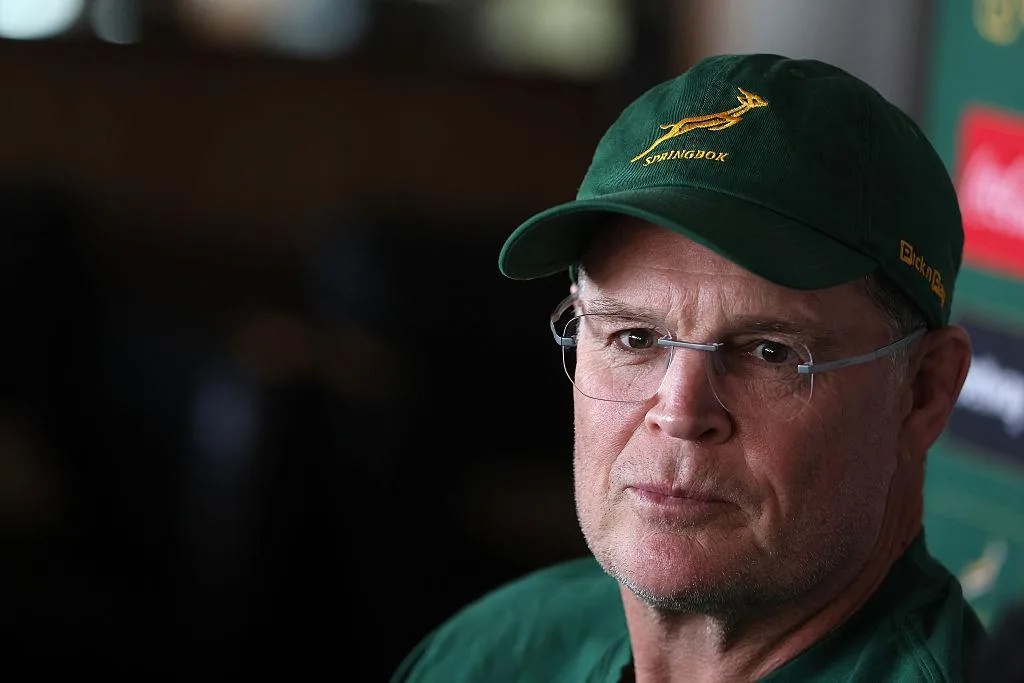
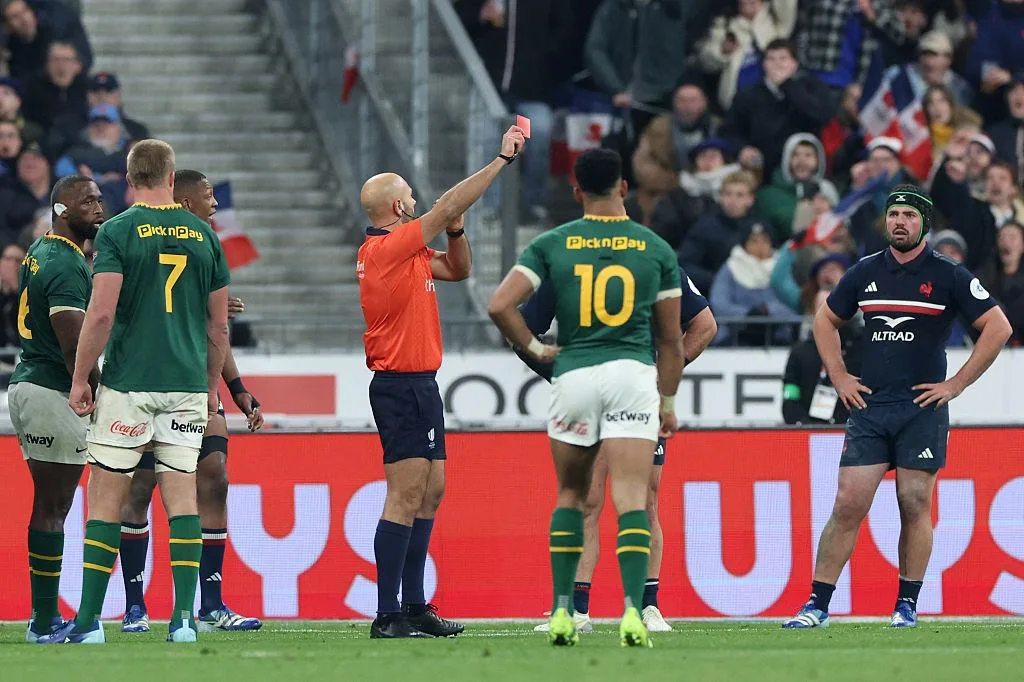
Springboks press conference · A red card is shown during France v South Africa · FILE PHOTOS
17 NOVEMBER 2026 · INTERNATIONAL RUGBY · DISCIPLINARY ACCOUNTABILITY · By ScrumAtMe Investigations
World Rugby has imposed an immediate six-international-match suspension on Springbok head coach Rassie Erasmus following his comments about match officiating, dangerous tackles and inconsistent disciplinary decisions.
But before the rugby world accepts the narrative that Erasmus crossed a line, there are questions that deserve answers.
Seventeen alleged knee-drop tackles. A Television Match Official who did not intervene. A South African player who received a nine-week suspension. An Irish international cleared after a separate genital-grab allegation. And a disciplinary system that now allows public comments about match officials to trigger automatic sanctions.
The issue is not whether referees should be protected from abuse. They should.
The issue is whether protecting officials has become confused with protecting their decisions from scrutiny.
Because rugby cannot demand accountability from players while treating questions about officiating as an offence in themselves.
South Africa lost 21–19 to France in Paris.
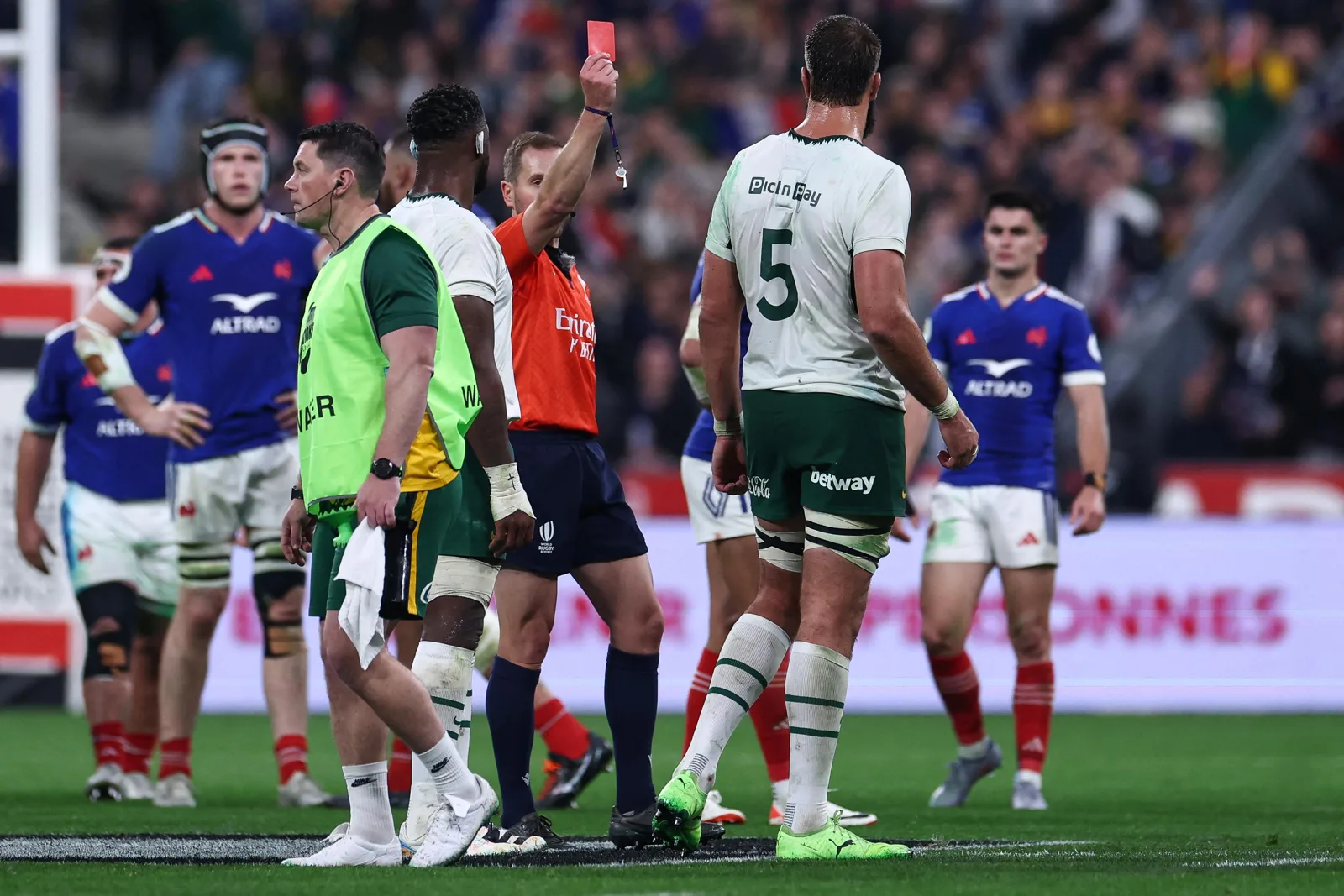
Nobody needs to pretend that the Springboks played a perfect match. Erasmus himself acknowledged that South Africa had failed to take its opportunities.
But that does not make the officiating questions disappear.
At his Monday press conference, Erasmus raised what he described as 17 knee-drop tackles by French players.
His assessment was specific:
These were not vague complaints about a referee having a bad afternoon.
Erasmus identified a particular type of tackle that World Rugby has been emphasising in its player-safety discussions.
He also explained that South African players had raised concerns with the referee during the match.
He said the Springboks could submit only five clips to World Rugby for review.
And he made a particularly important distinction:
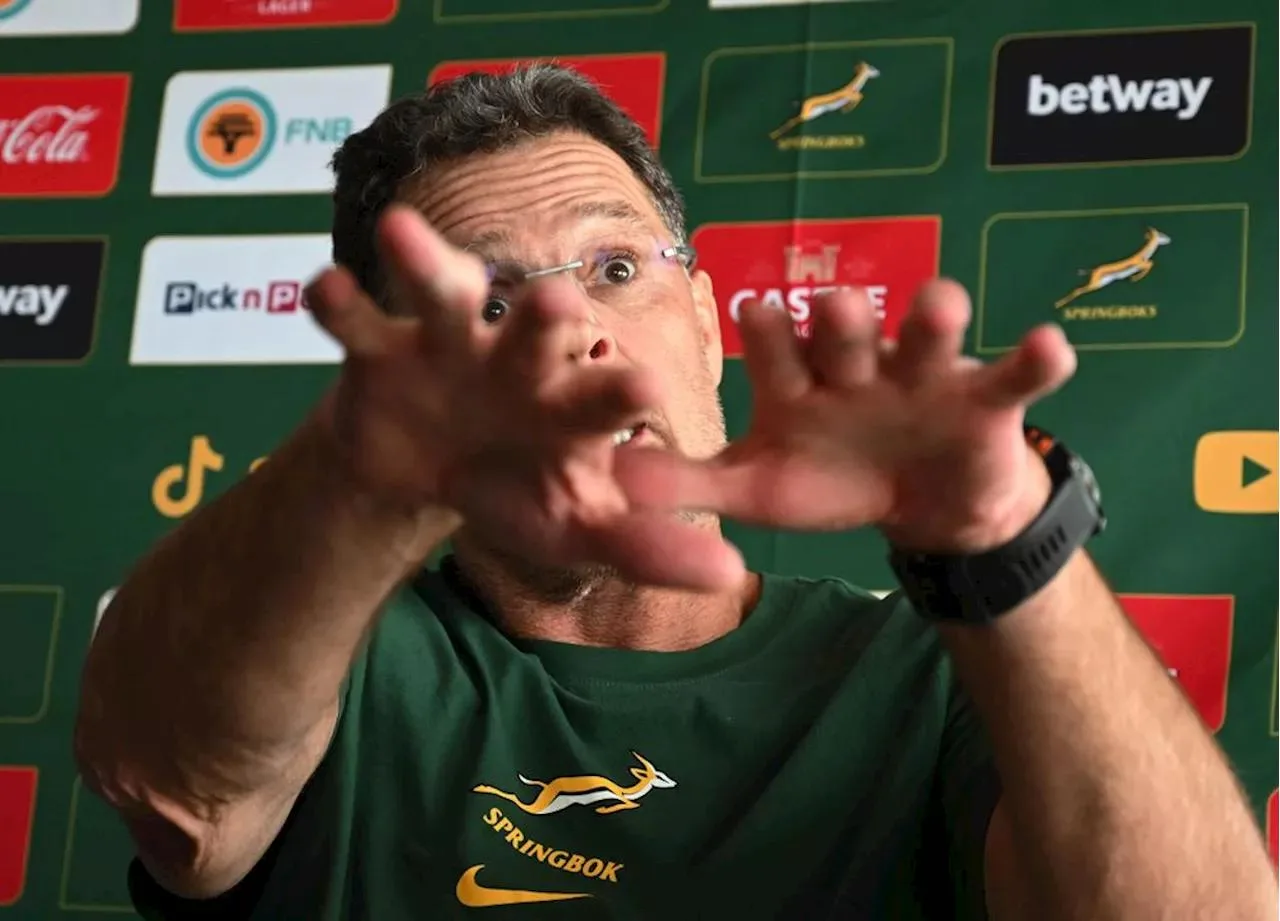
"I'm not saying he's wrong, I'm saying if he didn't see it, it must be a technology problem."
That is a question about the functioning of the officiating system.
If the TMO did not see the incidents, what does that say about the available technology and review process?
If the incidents were seen, why was there no intervention?
Those are questions rugby should be able to answer.
Our position: Every one of the 17 clips deserves independent examination. If Erasmus' assessment is wrong, show the evidence. If it is right, explain why the incidents were not dealt with.
Do not make the person asking the questions the only subject of the investigation.
This is where Erasmus' frustration becomes particularly understandable.
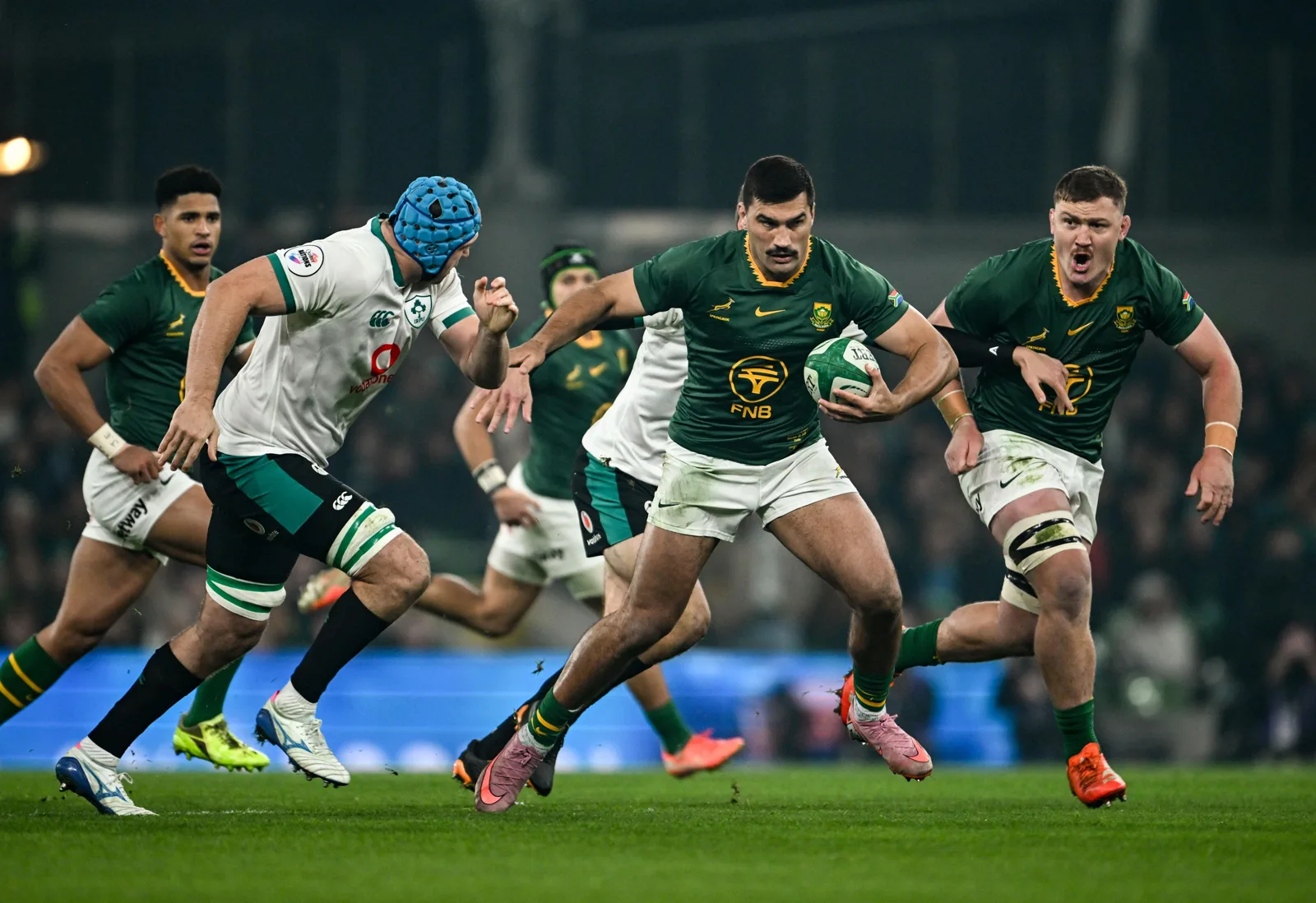
The two cases involve allegations under the same World Rugby Law 9.27, concerning conduct such as grabbing, twisting or squeezing another player's genitals.
But the outcomes were very different.
The Bulls hooker received an initial nine-week suspension after an allegation involving Connacht's Josh Murphy.
His ban was reduced by one week on appeal, leaving an eight-week suspension.
The 42 reported that the finding was made on the balance of probabilities rather than clear video evidence.
Furlong was cited after Munster's Gavin Coombes alleged that he had been grabbed during a breakdown.
The disciplinary committee subsequently dismissed the complaint.
On 17 November, Planet Rugby published details of the 22-page written judgment.
The committee found that:
| Same law: 9.27 | Jan-Hendrik Wessels | Tadhg Furlong |
|---|---|---|
| Allegation | Involving Connacht's Josh Murphy | Raised by Munster's Gavin Coombes |
| Outcome | Nine-week suspension, reduced to eight on appeal | Complaint dismissed |
| Basis reported | Balance of probabilities rather than clear video evidence | 22-page written judgment: footage and stills examined |
| Result | Sanctioned | Cleared |
Here is the point we must make carefully.
Furlong was cleared. Wessels was sanctioned.
The different outcomes deserve examination, particularly concerning the evidence threshold, the footage available, and the way the two disciplinary panels assessed the evidence.
We cannot honestly claim that Furlong was found guilty: he was not. Nor can we declare Wessels innocent as an established judicial fact: his appeal failed.
But we absolutely can ask why the two cases produced such different outcomes.
And we can demand that the Wessels footage and the complete written judgment be scrutinised.
Consistency cannot be a principle that applies only when the outcome suits the governing bodies.
This is the central issue.
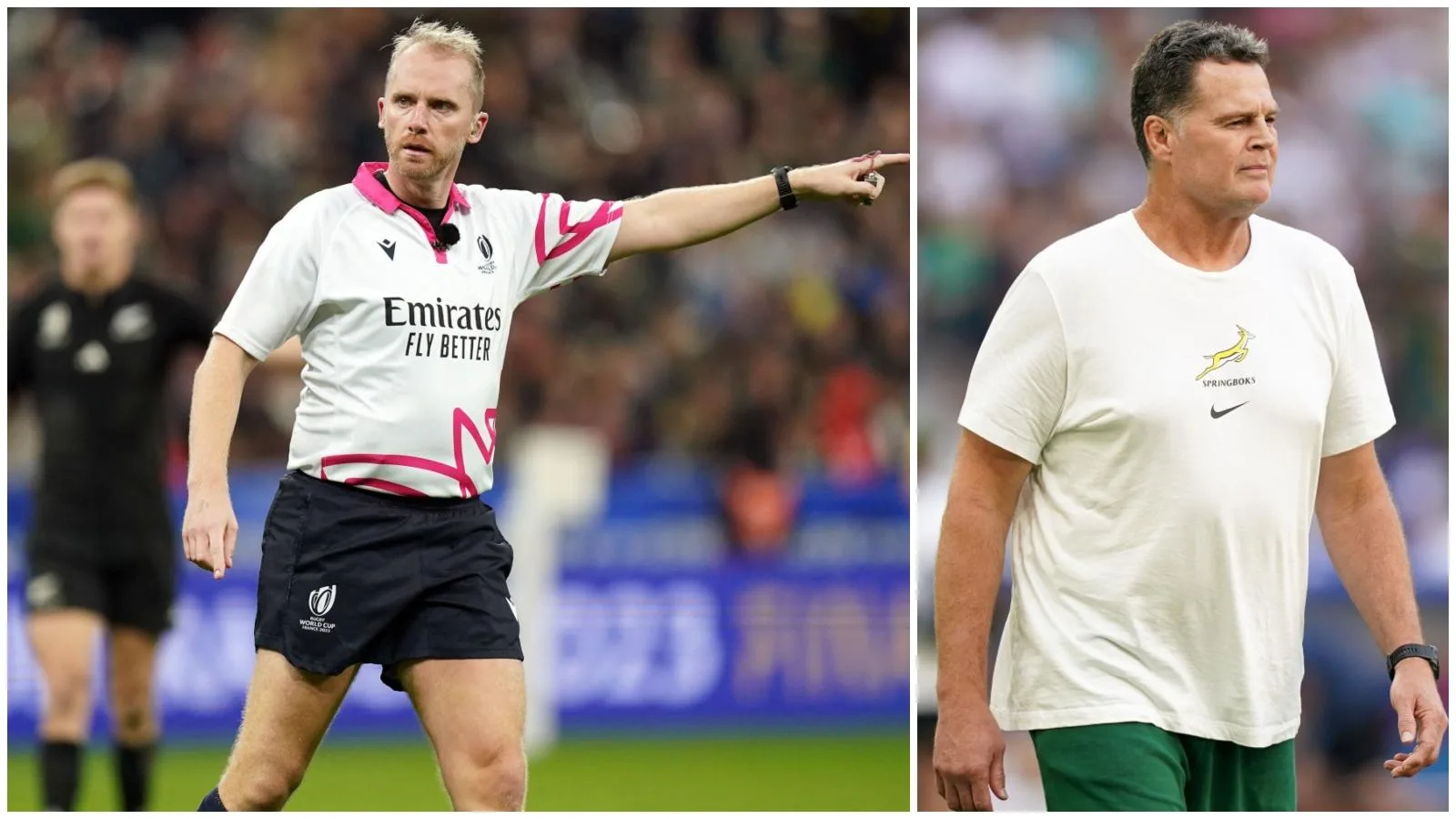
World Rugby's new Match Official Abuse Sanction Process was introduced in July 2026.
It allows an independent panel to assess comments alleging bias, prejudice, improper motives, external influence or deliberate attempts to affect a match result.
The framework also considers the reach, timing and circumstances of the comments.
World Rugby says respectful debate is acceptable, but questioning an official's integrity crosses a different threshold.
But consider the problem.
A coach watches his players repeatedly go down in tackles he believes are illegal. He believes the officials are failing to apply the laws. He raises those concerns publicly.
What should happen?
Should World Rugby:
Or should the immediate consequence be a six-match suspension for the coach who raised the issue?
We are not arguing that coaches should be free to accuse referees of corruption without evidence.
We are arguing that a question about possible manipulation is not proof of an accusation, and a governing body must carefully distinguish between the two.
Erasmus explicitly said he was not accusing the TMO of being wrong. He presented the possibility of a technology failure and questioned what it would mean if an official had seen an incident and deliberately ignored it.
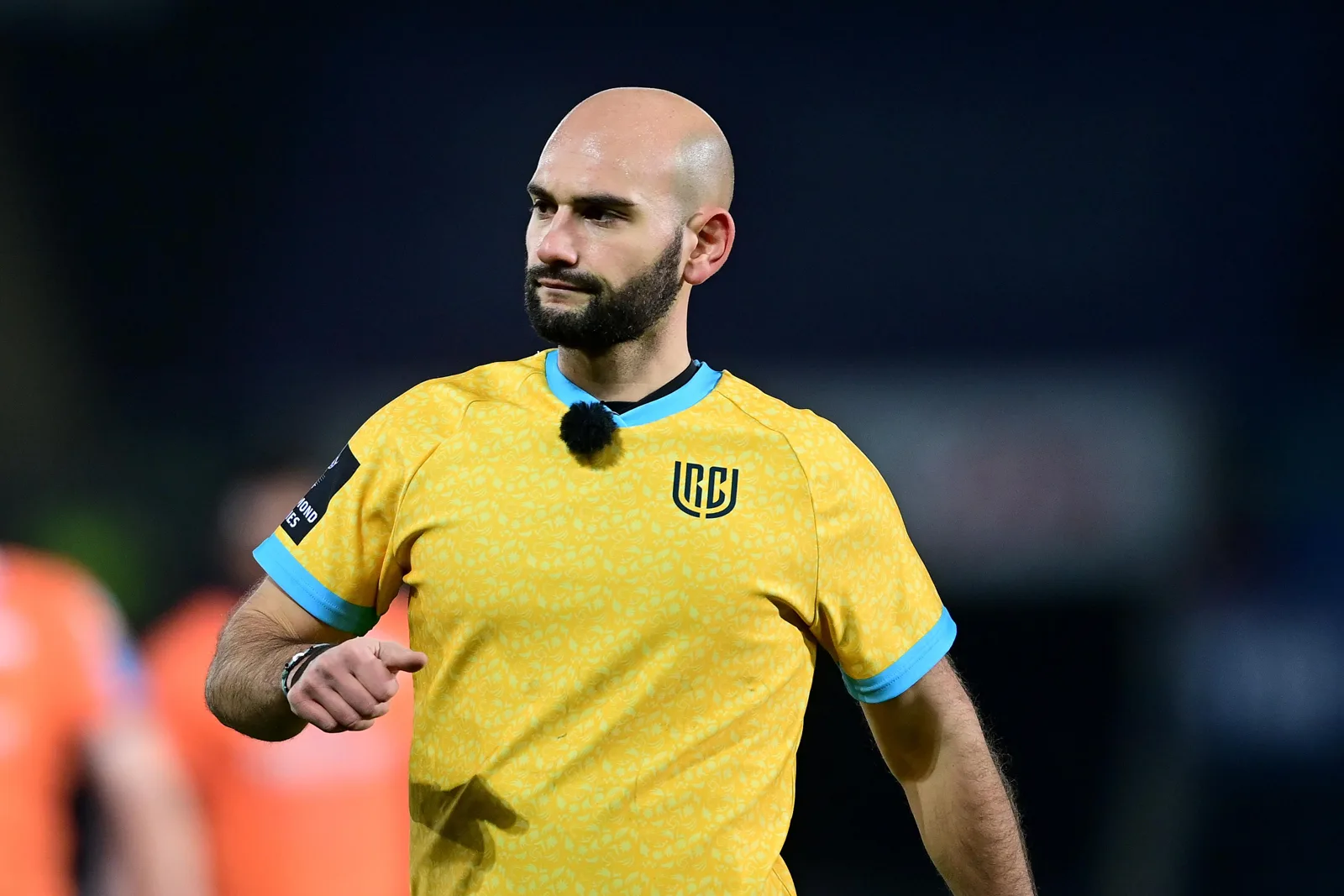
World Rugby has interpreted those remarks as serious misconduct.
That interpretation deserves scrutiny too.
Six international matches is a substantial punishment.
It removes the Springboks' head coach from match-day involvement, including communication with players and management.
The suspension also prevents him from attending the stadium, participating in match-official feedback processes and performing media duties on match days.
The question is whether the sanction is proportionate to the conduct.
What actual harm was established?
Were the 17 incidents examined?
Was the context of his comments sufficiently considered?
Did the panel distinguish between a direct allegation of corruption and a hypothetical question about what deliberate non-intervention would mean?
SA Rugby has requested a full misconduct hearing.
That hearing matters. Erasmus must have the opportunity to explain his remarks in full and challenge the sanction.
World Rugby must be able to protect its officials. But it must also be able to withstand scrutiny of its own disciplinary decisions.
There is something missing from much of the international coverage.
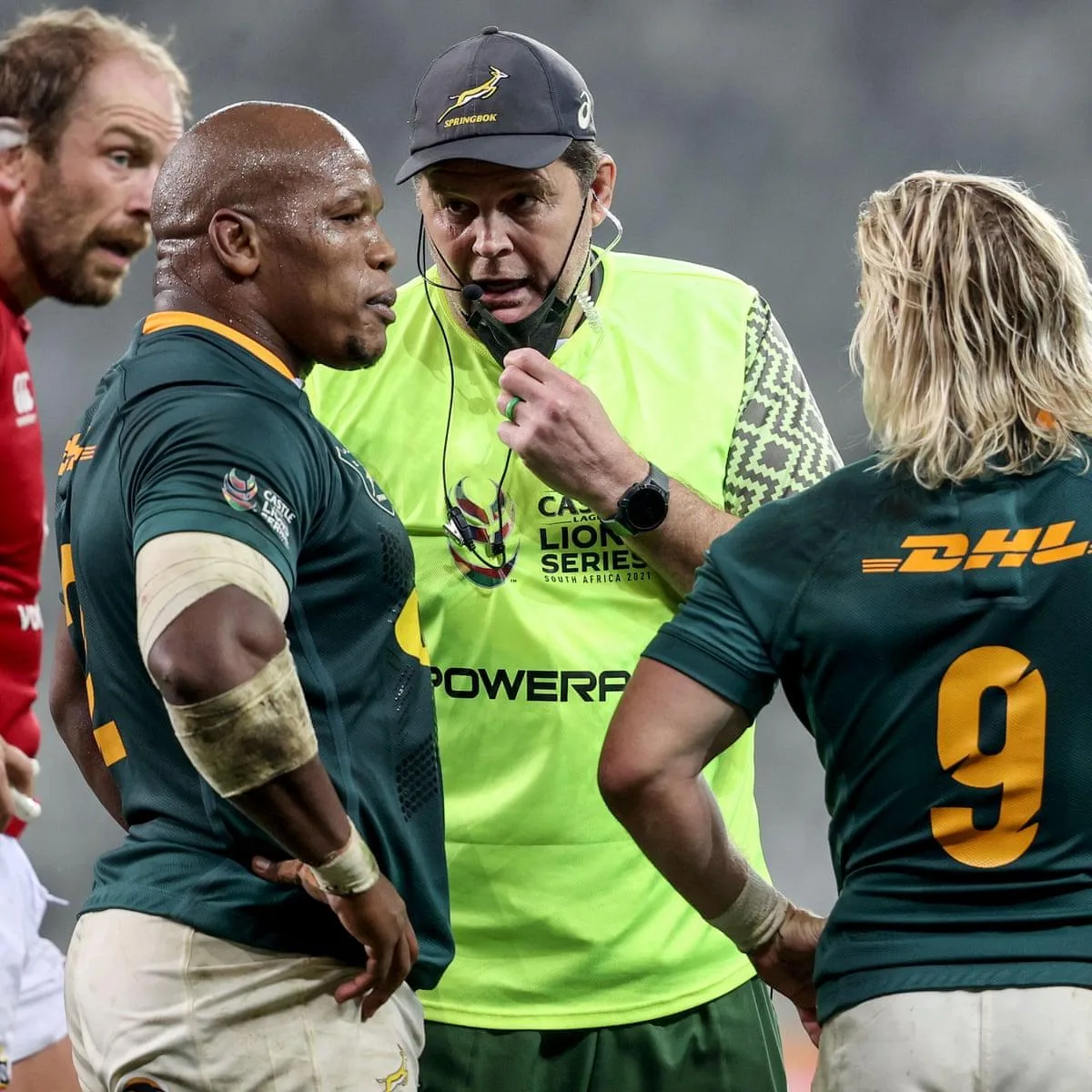
Rassie Erasmus is not simply a coach commenting on a referee's performance.
He is the head coach responsible for the welfare, preparation and interests of an entire national team.
When he believes his players are being subjected to dangerous tackles, he has a responsibility to raise those concerns.
When he believes disciplinary decisions are inconsistent, he has a responsibility to seek explanations.
When he believes a process is unfair, he should be able to challenge it.
We can disagree with his choice of words without dismissing the substance of his questions.
And we should not allow the controversy surrounding his delivery to distract from the underlying rugby issues.
Rassie Erasmus should not be above the rules.
Neither should match officials.
Neither should disciplinary committees.
Neither should World Rugby.
The same principles of consistency, evidence and accountability must apply to everyone involved in the game.
If Rassie is wrong, prove it through the footage, the laws and the evidence.
But do not make asking difficult questions a substitute for answering them.
SCRUMATME — We investigate FIRST. We cook SECOND.