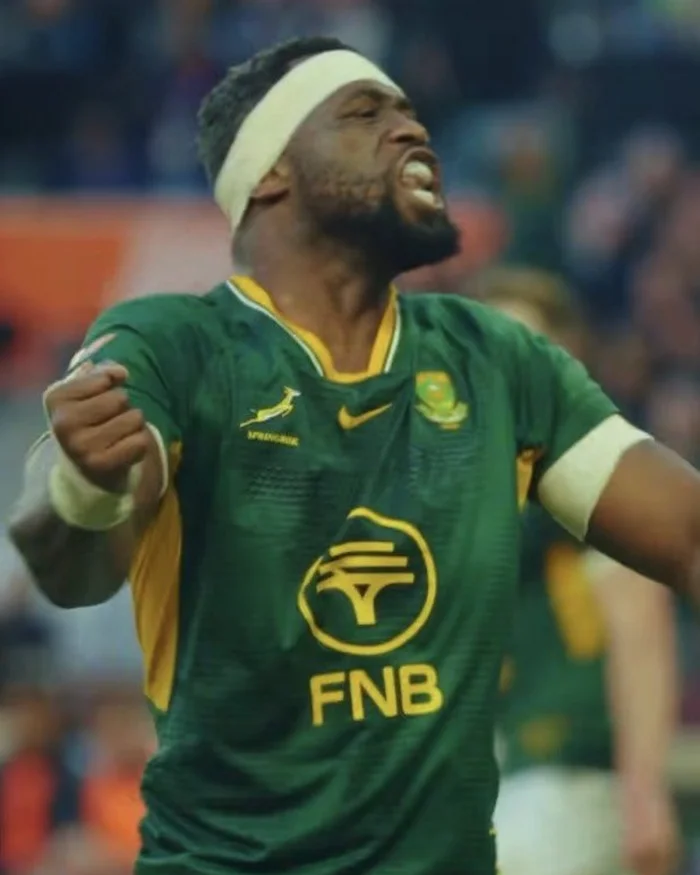
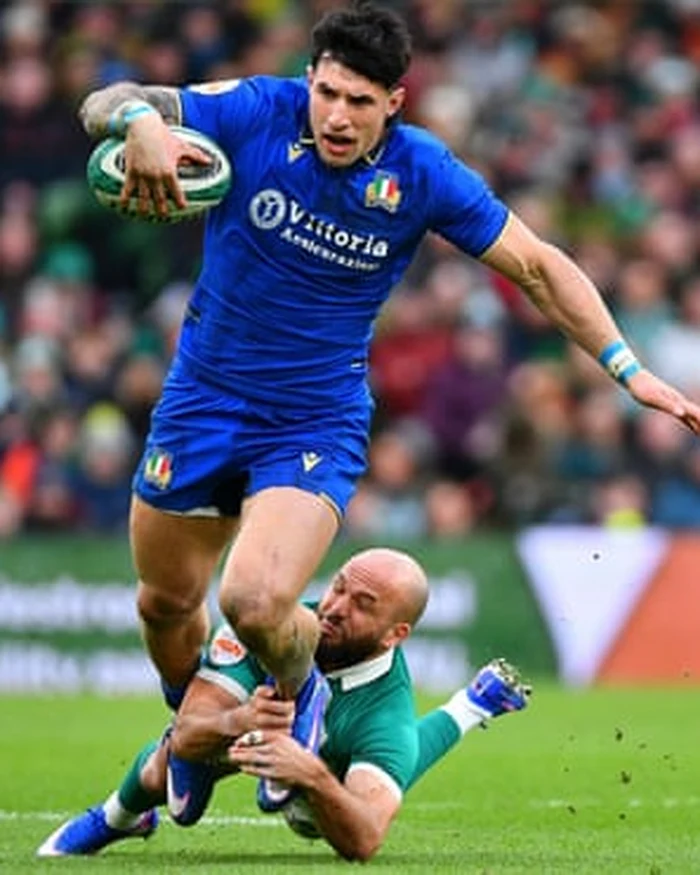
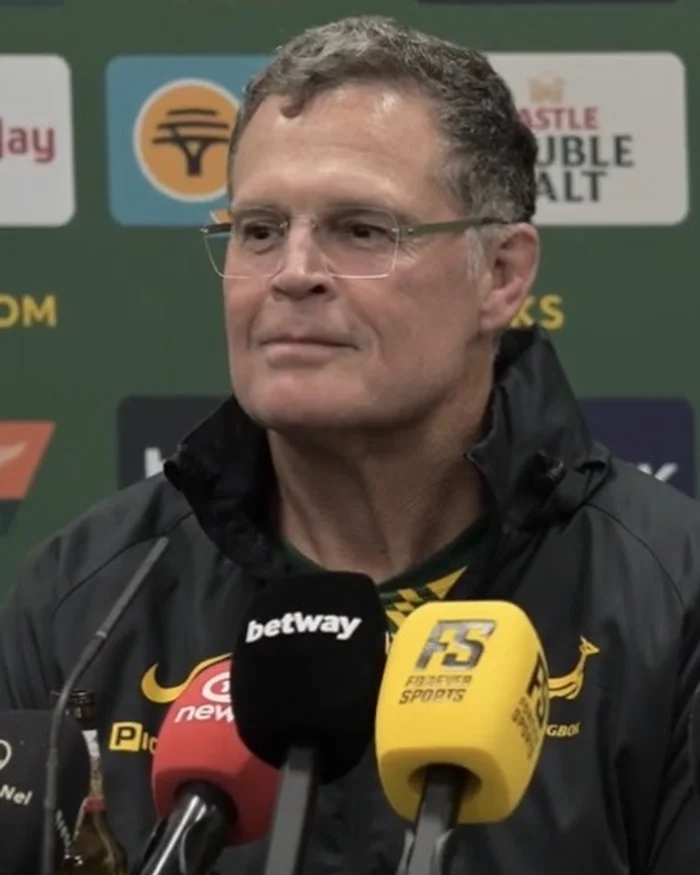
Siya Kolisi · Italy in action (file photo) · Rassie Erasmus
The Springboks did not travel to Turin to experiment, ease themselves into the European tour or save their best players for the bigger challenges ahead. Rassie Erasmus selected an experienced, near full-strength side, and the message was unmistakable: South Africa intended to take control of its Nations Championship campaign from the opening whistle.
Italy discovered just how serious that intention was.
The world champions overwhelmed the hosts 66–7 at Allianz Stadium on Saturday, scoring nine tries in a performance that had effectively settled the contest before half-time. South Africa led 45–0 at the interval, having scored six tries in the opening 40 minutes, while Italy struggled to contain the pressure, physicality and attacking execution coming from the visitors.
It was a bonus-point victory, South Africa's fourth consecutive win in the competition, and a significant improvement to the points difference that could prove decisive when the Southern Hemisphere standings are settled.
But the result was not simply about the size of the scoreline. It was the manner in which the Springboks imposed themselves, the depth of their attacking options, the contribution from their forwards and the statement made by a team that now has France and Ireland in its sights.
South Africa opened the scoring through a Sacha Feinberg-Mngomezulu penalty before the fly-half broke through the Italian defence from approximately 40 metres to score the first try.
Morne van den Berg followed with a close-range finish, before Malcolm Marx crossed from a driving maul. The Springboks were already finding different ways to punish the hosts, with the forwards establishing the platform and the backs exploiting the opportunities created by that pressure.
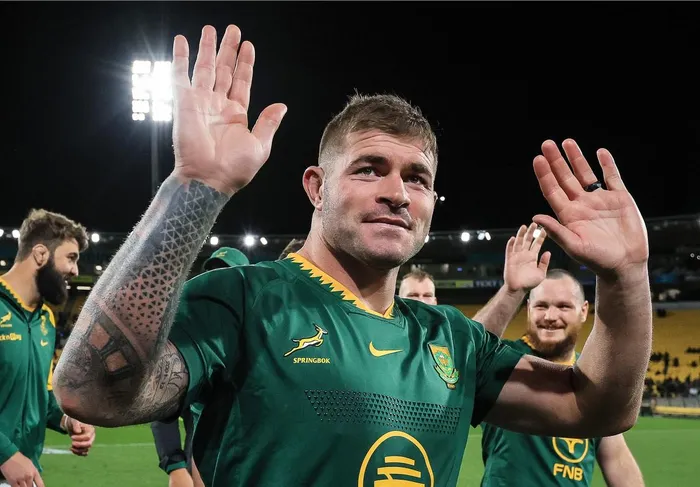
Siya Kolisi added another after Feinberg-Mngomezulu produced a 50:22, and Damian Willemse finished a Jasper Wiese break beneath the posts.
Italy's afternoon deteriorated further when prop Muhamed Hasa received a yellow card for a deliberate knock-on. South Africa capitalised, with Marx scoring his second try from another driving maul.
Six tries. Six conversions. A penalty. Forty-five points.
Italy had not scored.
The first half was a demonstration of how quickly the Springboks can turn territorial pressure and forward dominance into points. They did not need to rely on one attacking route. They scored through individual brilliance, close-range execution, line breaks and the driving maul.
The contest was effectively over before the teams returned to the field.
| Italy | Match statistic | South Africa |
|---|---|---|
| 0 | Points | 45 |
| 0 | Tries | 6 |
| 0 | Conversions | 6 |
| 38% | Possession | 62% |
| 36% | Territory | 64% |
| 37 | Carries | 58 |
| 0 | Line breaks | 6 |
| 36 | Passes | 54 |
| 14m | Post-contact metres | 58m |
| 64 | Tackles made | 33 |
| 13 | Missed tackles | 7 |
| 77% | Tackle completion | 69% |
| 80% | Lineout success | 100% |
| 6 | Penalties conceded | 1 |
| 1 | Yellow cards | 0 |
Source: Rugby365 live match statistics. These are the recorded 42nd-minute figures, not full-time statistics.
The most revealing statistic is not possession. It is the defensive workload.
Italy had made 64 tackles by the 42nd minute. South Africa had made just 33. The Italians were spending far more time defending, while the Springboks were controlling territory, carrying the ball and creating opportunities.
The difference in line breaks was even more telling: six for South Africa, zero for Italy.
South Africa also produced 58 post-contact metres against Italy's 14, demonstrating the physical advantage the visitors were establishing after initial contact.
And while Italy's tackle completion was actually higher at this point, the volume of defensive work tells the bigger story: they were being forced to make tackle after tackle while South Africa continued to attack.
Erasmus began introducing his replacements early in the second half, bringing the familiar Bomb Squad into the contest.
Wilco Louw powered through three Italian tackles shortly after the restart to score South Africa's seventh try. Italy eventually found a response through Federico Ruzza, who finished a well-worked attack in the corner. The conversion brought the home side onto the scoreboard at 52–7.
The Italian performance improved as the second half progressed, particularly after replacement halfbacks Stephen Varney and Tommaso Allan entered the game. South Africa also lost some of the intensity that had characterised the opening 40 minutes, with errors beginning to creep into its play.
However, the Springboks were not finished.
Paul de Villiers scored from another driving maul, and Ethan Hooker completed the scoring with a late try, giving South Africa its ninth of the afternoon.
The final score was 66–7.
All nine Springbok tries were converted, with Feinberg-Mngomezulu also adding the opening penalty. Italy managed one converted try.
The 59-point margin reflected the scale of South Africa's superiority, although the second half also showed why maintaining intensity for the full 80 minutes remains important against stronger opposition.
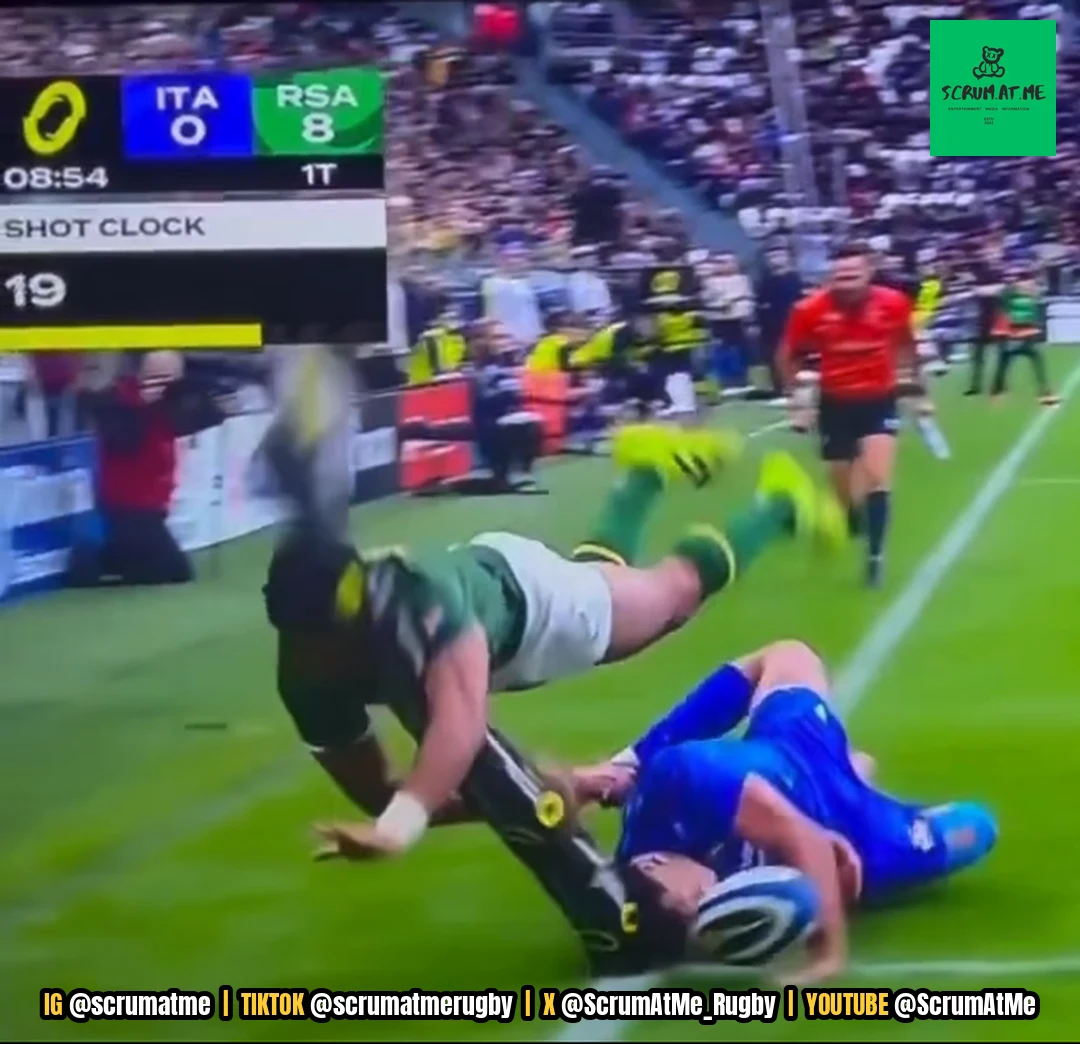
Feinberg-Mngomezulu was the standout attacking contributor, finishing with 26 points.
His contribution included the opening penalty, a try and nine successful conversions. His individual performance was central to the scoring total, but his influence extended beyond the points.
His 50:22 helped create the opportunity for Kolisi's try, while his attacking instincts gave Italy another problem to manage throughout the first half.
Malcolm Marx also delivered a significant performance, scoring twice from the driving maul. The Springbok hooker took his international try tally to 30, adding another milestone to an already impressive Test career.
The other South African try-scorers were Morne van den Berg, Siya Kolisi, Damian Willemse, Wilco Louw, Paul de Villiers and Ethan Hooker.
Man of the Match: Feinberg-Mngomezulu was the leading individual performer by points contribution. An independently verified official Man of the Match announcement has not been located, so his statistical performance should not be confused with confirmation of the formal award.
The Springbok selection was one of the major talking points before kick-off.
With France and Ireland still to come, Erasmus could have rotated his squad and given more players an opportunity. Instead, he selected a highly experienced starting XV carrying 835 combined Test caps.
The selection included Siya Kolisi, Pieter-Steph du Toit, Malcolm Marx, Jasper Wiese, Damian de Allende, Jesse Kriel and Feinberg-Mngomezulu.
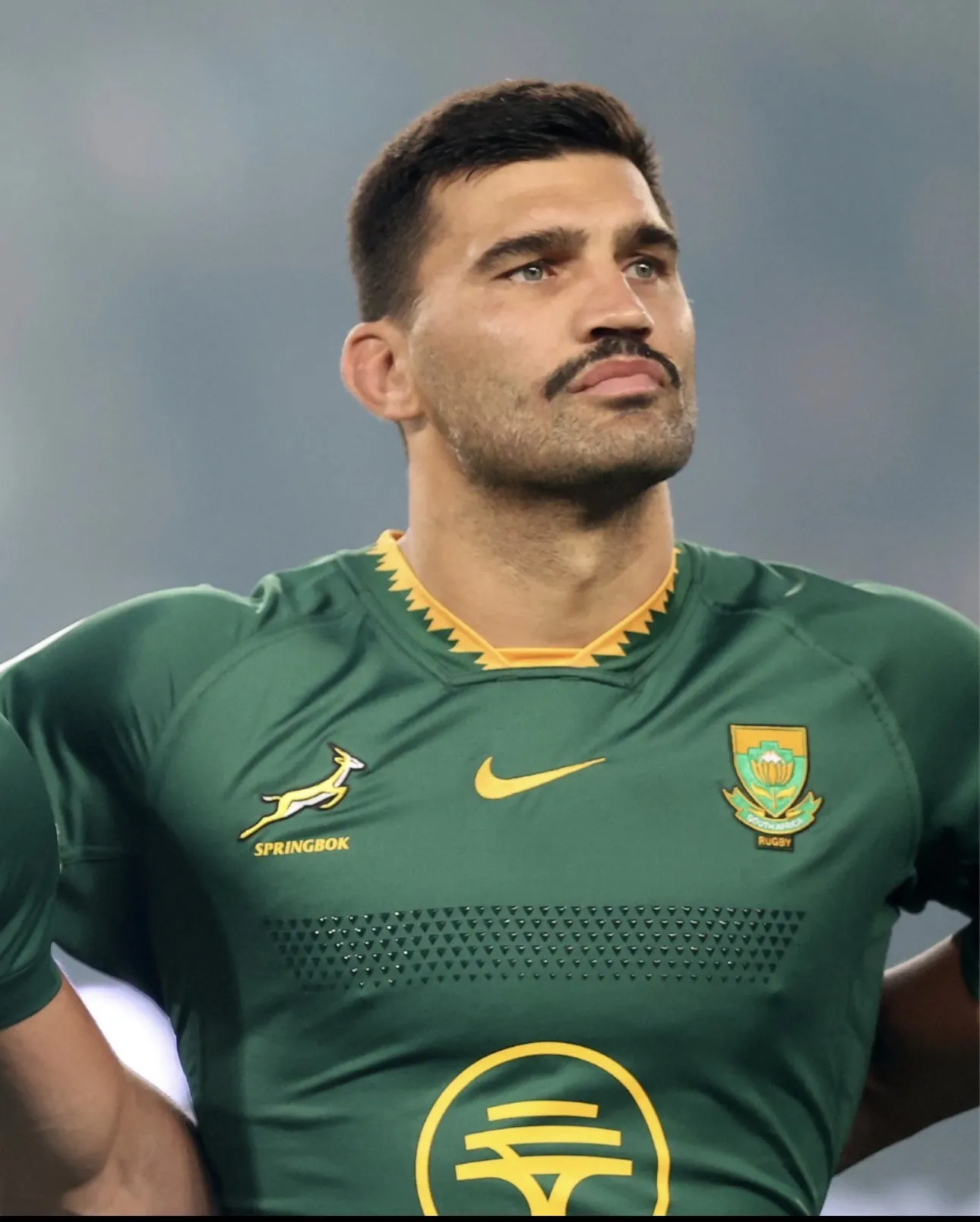
Erasmus explained before the match that the competition was being taken seriously and that South Africa wanted to maintain momentum while remaining in contention for the championship.
He acknowledged that the team had limited preparation time, but was confident that the experienced players returning from their club commitments would integrate into the established structures.
His reasoning was also shaped by the wider tournament. South Africa wanted to finish at the top of the Southern Hemisphere standings and qualify for the decisive Finals Weekend.
The decision to field such a strong side against Italy was therefore not accidental. The Boks wanted a winning start to the European leg, and they wanted the points that came with it.
Springbok assistant coach Mzwandile Stick had already warned against underestimating Italy, despite the hosts arriving with several important players unavailable through injury.
Speaking before the match, Stick highlighted the threats posed by Ange Capuozzo, Monty Ioane and Paolo Garbisi.
He described Capuozzo as world-class and warned that giving him time and space would allow him to punish South Africa.
Stick also identified the importance of starting the European tour strongly, particularly with the championship final within reach.
"For us, the start is very important," he said.
His warning was not simply about respecting Italy. It was about the wider competition and South Africa's need to maintain its position ahead of New Zealand.
The Springboks ultimately delivered the start their coaching staff wanted, although the second-half drop in intensity gives the coaches something to examine before the next two Tests.
Italy head coach Gonzalo Quesada knew the scale of the challenge awaiting his side.
In his pre-match comments, Quesada praised Erasmus, describing him as the best coach in world rugby. He also interpreted South Africa's decision to select its strongest available team as a sign of respect towards Italy.

"France and Ireland are certainly bigger challenges and bigger matches for them," Quesada said. "So knowing that he's put out his best team, the best players in the world, the best South Africans for us, is just a big sign of respect."
There was also an admission about the difficulty of preparing for South Africa.
Quesada explained that Italy normally spent considerable time studying opponents and identifying weaknesses around which to build a tactical approach. Against the Springboks, he found that process considerably more difficult.
"When you don't find weaknesses, you just have to focus on yourself and do the best you can," he said.
That assessment now reads differently against the final scoreline. Italy conceded 45 points without reply in the first half, and the defensive problems Quesada had been preparing his team to manage became overwhelming.
The Italian coach also faced a difficult selection situation. Injuries had ruled out several important players, including centres Juan Ignacio Brex and Tommaso Menoncello, while captain Michele Lamaro was unavailable.
Quesada made 10 changes to the side, with much of the reshuffle driven by those absences.
With Lamaro unavailable, Giacomo Nicotera captained Italy against the Springboks.
The hooker had spoken emotionally about receiving the responsibility, describing it as the culmination of years of work.
His pre-match comments were about more than the immediate challenge of playing South Africa. Nicotera wanted Italy to establish a collective identity, particularly with new players coming into the squad.
He acknowledged that injuries had reduced Italy's depth but argued that the newcomers had raised the intensity of training.
"We want to create an identity," he said.
Nicotera also made clear that Italy would not approach the match with fear.
"Tomorrow we face the best in the world. It's beautiful. We will take the field with our faces uncovered and without fear."
Italy ultimately suffered a heavy defeat, but the captain's comments provide important context about what the team was trying to build during the November international window.
His post-match assessment, alongside Quesada's explanation of the first-half collapse, would provide an important additional perspective. No verified post-match interview or transcript from Nicotera has yet been located.
The victory takes South Africa to 20 points from a possible 20 after four consecutive wins.
The Springboks had already beaten England, Scotland and Wales in the July opening phase of the competition. The Italy result adds another five-point return, including the bonus point for scoring at least four tries.
Their points difference has increased from +81 to +140.
New Zealand entered the weekend on +51, meaning South Africa's points-difference advantage over the All Blacks stood at 89 points following the Italy result, before New Zealand's match against Scotland.
The distinction matters. South Africa is not merely collecting victories; it is building a substantial advantage in a competition where finishing at the top of the Southern Hemisphere standings is a major objective.
Italy, meanwhile, dropped to four defeats from four matches in the championship.
The tournament now moves into a much more demanding phase for the Springboks.
South Africa's next assignment is France in Paris on 13 November.
The French side represents a significantly different challenge from an injury-depleted Italy. France has the attacking ability, physicality and depth to punish any defensive lapses, particularly if the Springboks repeat the second-half drop in intensity seen in Turin.
Ireland follows on 21 November, providing another demanding examination before the Finals Weekend in London.
The importance of the Italy victory is therefore twofold: South Africa has secured the maximum competition points available, and it has given itself a strong platform before facing two of the Northern Hemisphere's leading sides.
The Springboks have made their intentions clear. They are not travelling to Europe simply to participate. They are chasing the Nations Championship.
And after what happened in Turin, France and Ireland will have a very clear idea of the challenge waiting for them.
SOUTH AFRICA 66. ITALY 7. NINE TRIES. FOUR WINS. THE BOKS HAVE ARRIVED. 🇿🇦