
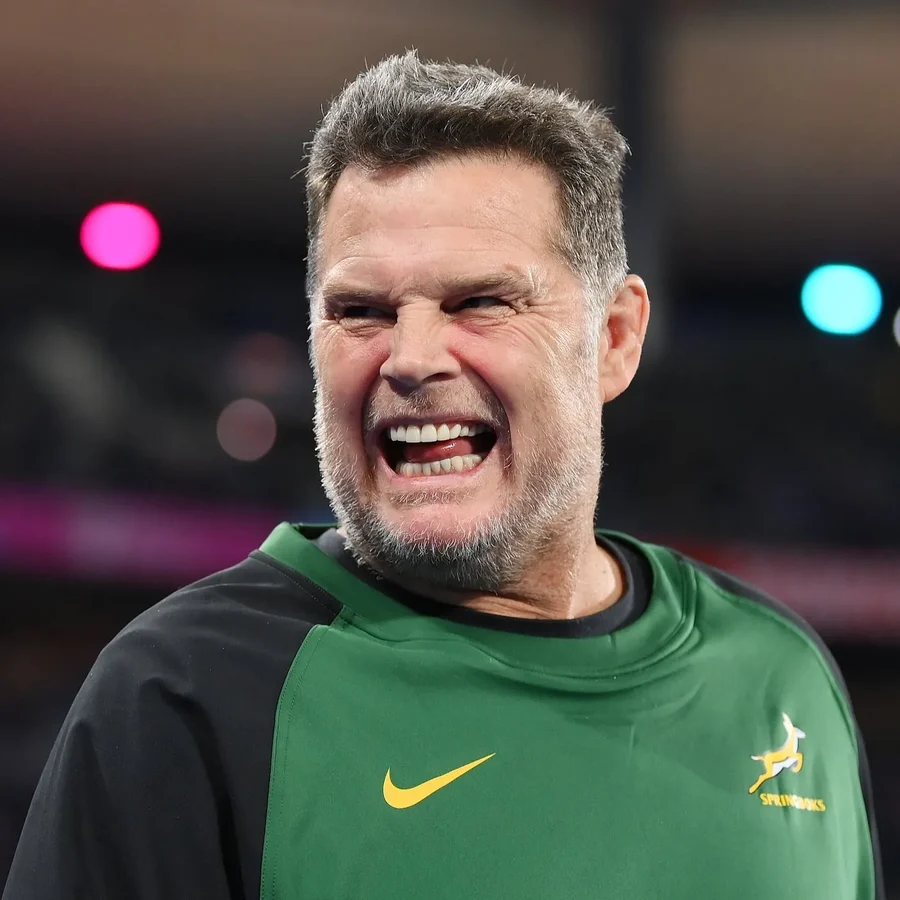
Eddie Jones · Rassie Erasmus · FILE PHOTOS
Six Springbok stars have confirmed moves or returns from Japan. A seventh, Damian de Allende, is now reportedly in discussions about coming home. Some are walking away from Japanese salaries reportedly worth millions more than their South African contracts. Meanwhile, Eddie Jones has spent years questioning the number of foreign players in Japan — despite once describing the very same environment as a massive advantage for South Africa. So is this really about developing Japanese rugby, or has the criticism become selective?
Something is changing in Japan Rugby League One.
The South African presence that has helped make the competition a destination for world-class rugby talent is shrinking. Springbok stars who have spent years representing Japanese clubs are returning to South Africa, signing with local franchises or exploring opportunities closer to home.
The names are serious.
Faf de Klerk. Cheslin Kolbe. Kwagga Smith. Malcolm Marx. Manie Libbok. Pieter-Steph du Toit.
And now Damian de Allende is reportedly in discussions about a possible return.
These are not unknown imports. They are World Cup winners, Test centurions, World Rugby award winners and players who have helped define the modern Springbok era.
At the same time, Japan's head coach, Eddie Jones, has repeatedly raised concerns about the number of overseas players in the domestic competition.
The latest controversy centres on a claim circulated by Rugby Scoop on 6 November: that Jones is unhappy with South Africans treating Japan like a holiday destination.
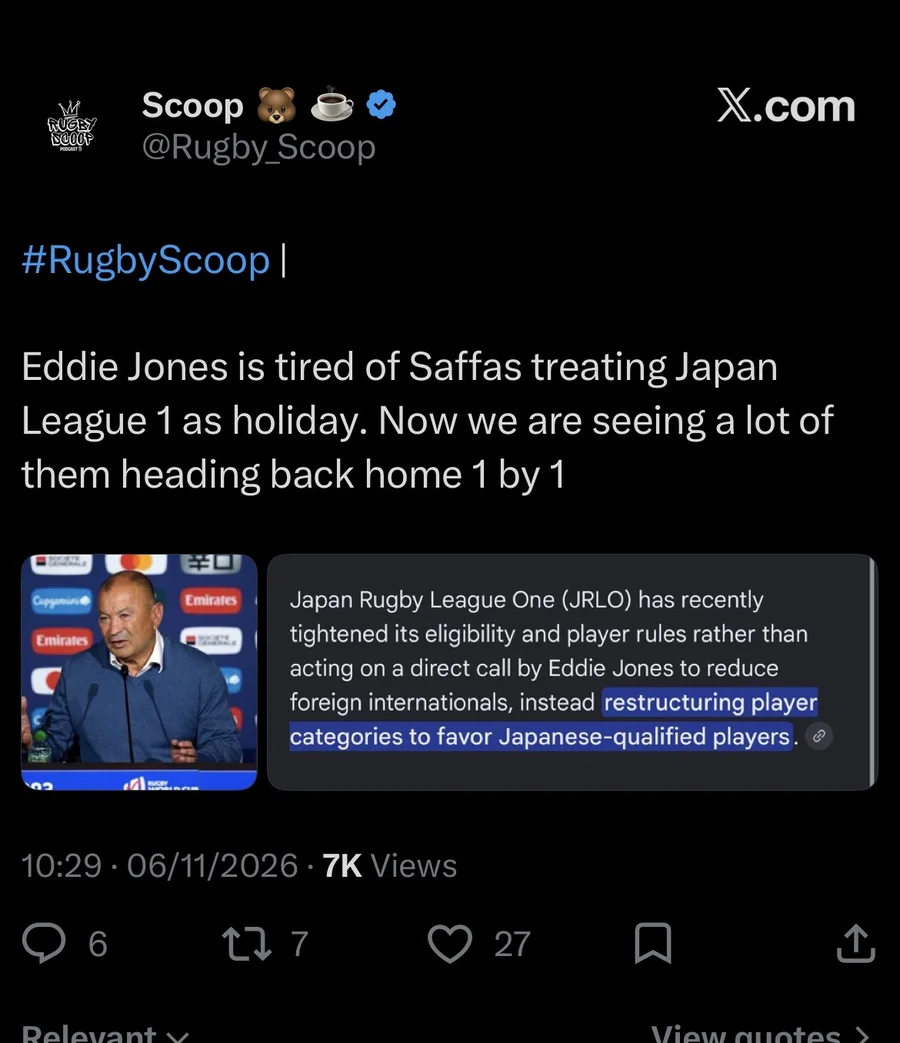
That is a serious allegation. We have not located the original recording or transcript establishing that exact wording, so we will not pretend it is a verified quotation.
But Jones's wider comments are on record. And when they are placed in chronological order, a pattern emerges.
There is a legitimate debate about Japanese player development. There is also a legitimate question about why South African players appear to have become the focus of a controversy involving an entire international recruitment system.
Because Japan did not build a professional rugby league by importing South Africans alone.
And Eddie Jones knows that better than most.
Only 53% of League One playing time is going to Japanese players. “I have no problem with foreigners; I am one myself.”
Japan lose 61–7 to South Africa.
“You need a body to play Test match rugby.” The target: Japanese domestic players’ physical preparation.
On South Africans in Japan: “It’s an advantage for them, a massive advantage.”
League One is “overflowing with foreign players”. Picking a university player was “a little bit the idea”.
Claims Jones is tired of South Africans treating League One as a holiday.
Returning Springboks reportedly accepting pay cuts of at least 50% on average.
De Allende and Du Toit in talks with the Boland Cavaliers. Not finalised.
Let's start with the first major documented intervention.
On 7 November 2024, Rugbyrama published an interview with Jones about the progress of Japanese rugby and the impact of its professional competition.
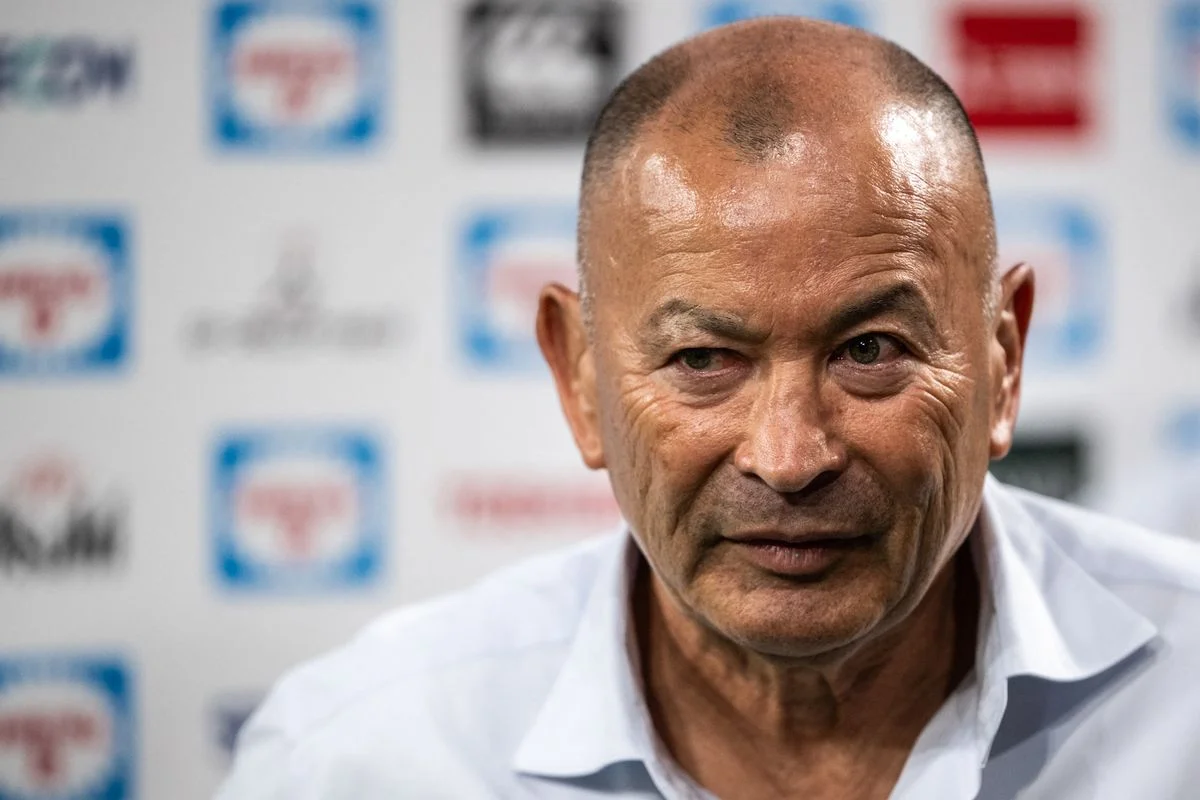
He was asked whether Japan Rugby League One had helped develop Japanese players.
His response included a statistic:
Only 53% of total playing time was being contested by Japanese players.
The remaining 47% involved foreign players.
Jones explained that Japan did not have enough players in certain positions. He specifically highlighted the second row, where he said only one Japanese player was represented across the 12 League One teams.
Then he made an important admission:
"Je n'ai pas de problème avec les étrangers, j'en suis moi-même un."
Translation:
"I have no problem with foreigners; I am one myself."
He said Japanese supporters wanted to see Japanese players and that the competition needed to find a balance.
That is the starting point of his argument.
Not South Africa. Not the Springboks. Not one particular nationality.
Foreign-player representation.
The concern was that Japanese clubs were importing talent faster than the domestic system was producing its own international-standard players.
That is a legitimate development question.
But it is also a question that must be applied consistently. If foreign players are a problem, the issue cannot suddenly become a South African problem simply because South Africans are among the most successful imports.
Source: Rugbyrama — Exclusive Eddie Jones interview, 7 November 2024
Fast-forward to November 2025.
Japan had just suffered a 61–7 defeat against South Africa at Wembley on 1 November.
The result exposed a substantial gap between the sides. South Africa dominated physically, particularly in the collision and breakdown areas.
On 24 November, Jones turned his attention to the physical preparation of Japanese domestic players.
His message was blunt:
"You need a body to play Test match rugby."
And:
"You've got to train appreciably harder than they've been training."
He also discussed a young player who had added five kilograms of muscle in five months. Jones argued that players should not need the national coaching staff to tell them to improve their physical condition.
He wanted players who were hungry to compete at international level.
There is an important distinction here.
Jones was criticising the preparation of players in Japan's domestic system. He was not demonstrating that South African imports were failing to train, failing to perform or treating their contracts as holidays.
In fact, the South Africans playing in Japan were among the players demonstrating that the competition could accommodate world-class international performers.
The criticism was about the development of Japanese players.
That distinction should not disappear when the conversation turns to South Africans.
Now this is where the timeline gets interesting.
On 7 March 2026, Jones appeared on the Rugby Unity podcast.

The discussion turned to South Africa's selection policy and the number of Springboks playing their club rugby in Japan.
Jones did not describe them as players enjoying a paid holiday.
He praised the arrangement.
He said:
"Look at how many South Africa players play in Japan and I actually think that they benefit from it because it's a little bit less arduous on your bodies."
He explained that the competition offered players good training time, sufficient practice and plenty of touches on the ball.
Then he discussed the lifestyle.
He said the best players had fewer media and endorsement obligations, were well paid, and had happy families.
He described them returning refreshed.
And his conclusion?
"It's an advantage for them, a massive advantage."
That is Eddie Jones speaking in March 2026.
He was not describing South African players as unprofessional. He was explaining why Japan's rugby environment could benefit the Springboks.
He even pointed to Malcolm Marx's success after playing in Japan.
So what exactly changed?
Did the players' professionalism suddenly deteriorate? Did the standard of their training collapse? Did their contribution to their Japanese clubs become a problem?
Or did the conversation move from the benefits of overseas recruitment to the politics of who gets opportunities in Japanese rugby?
Those questions deserve answers.
Source: Planet Rugby — Eddie Jones says the Springboks have a massive advantage, 7 March 2026
On 17 July 2026, Rugbyrama published another interview with Jones.
This time, he was asked whether Japan's professional championship had genuinely improved the national team.
He acknowledged that League One had become extremely strong, comparing it to the French Top 14.
But then came the criticism:
"Notre championnat, la League One, est devenu extrêmement fort, un peu comme le Top 14 mais il regorge de joueurs étrangers."
Translation:
"Our championship, League One, has become extremely strong, a bit like the Top 14, but it is overflowing with foreign players."
He described the situation as a double-edged sword.
A strong league is good. But Japan needs to produce its own young players.
The interviewer then asked whether Jones was jealous of France's JIFF system, which encourages clubs to field locally trained players.
Jones said he was not jealous, pointing out that Japan's own rules were changing for the following season.
Then came the exchange that deserves particular attention.
The interviewer asked whether Jones's decision to select an inexperienced Japanese university player was also a message to club executives that they could use local talent instead of foreign recruitment.
Jones answered:
"C'est un peu l'idée, ouais."
Translation:
"That's a little bit the idea, yes."
That is revealing.
Jones openly acknowledged that his selection decision was partly intended to challenge the recruitment priorities of Japanese clubs.
He was using the national team to make a point about the domestic competition.
Again, the subject was foreign-player dependence.
But here is the question: if Japan's clubs have built a competition that attracts some of the world's best players, why is the presence of those players being framed as a problem rather than as an opportunity to develop the domestic game alongside them?
France has its JIFF system. Other countries have their own development policies. There is nothing unusual about a national coach wanting to protect domestic pathways.
But there is a difference between encouraging local development and treating international recruitment as though it is inherently illegitimate.
“It's an advantage for them, a massive advantage.”
“...it is overflowing with foreign players.”
Source: Rugbyrama — Eddie Jones interview, 17 July 2026
Now let's talk about the man making the argument.
Eddie Jones was born in Burnie, Tasmania, Australia, on 30 January 1960.
He is Australian.
He has coached in Australia, Japan, England and South Africa.
His career includes:
He was appointed Japan head coach in 2024, returning to a country where he had previously worked as a club and national-team coach.
And there is nothing wrong with that.
In fact, it is how international rugby works.
Coaches move. Players move. Knowledge moves. Clubs recruit internationally. National teams benefit from the experience accumulated in different competitions.
Jones himself is a product of that global rugby system.
He has worked in Japan without being Japanese. He coached England without being English. He advised South Africa without being South African.
His career has been built on international movement.
So the argument cannot simply be that foreign people working in Japanese rugby are a problem.
If that were the standard, the same question would have to be asked about foreign coaches, overseas specialists, international recruitment and the global movement of rugby knowledge.
You cannot build an international career on the global rugby market and then pretend that the global rugby market is somehow suspicious when players from another country benefit from it.
Jones is entitled to argue that Japan needs more Japanese-qualified players.
But that argument must not become a convenient way to single out South Africans.
Source: Rugby Australia — Eddie Jones profile | Japan Rugby Football Union — Appointment and coaching history
Let's put the foreign-player debate into perspective.
South Africans are not the only international stars playing in Japan.
The 2025–26 League One competition included international players from New Zealand, Australia, South Africa, Fiji and Argentina.
Among the prominent names were:
One published breakdown of the 2025–26 competition counted 56 players with senior international representation in its Category C group: 15 from New Zealand, 10 from South Africa and seven from Australia.
The point is not that every one of these players has the same contract, role or impact.
The point is that international recruitment is part of the competition's identity.
Japan has actively attracted global rugby talent.
And the league has benefited from the quality, experience and attention that comes with it.
The same logic applies in France, England, Ireland, South Africa and New Zealand. The global game is interconnected.
A player can represent one country, earn a living in another and contribute to the development of a club and its community somewhere else.
That is professional rugby.
Source: Japan Rugby League One foreign-player breakdown, 2025–26
This is the part that gets lost when the debate becomes a numbers exercise about foreign-player percentages.
A club does not sign a Springbok simply to fill a jersey.
It signs a player with international experience, a global profile, a reputation, a professional standard and the ability to influence the team around him.
Look at the South Africans who have been part of the Japanese competition.
Malcolm Marx — a two-time Rugby World Cup winner, a dominant international hooker and the reigning World Rugby Player of the Year.
Pieter-Steph du Toit — a two-time World Rugby Player of the Year and one of the most influential forwards of his generation.
Cheslin Kolbe — a two-time Rugby World Cup winner whose profile extends well beyond South Africa.
Kwagga Smith — a World Cup winner and an important performer for the Springboks.
Faf de Klerk — a two-time World Cup winner whose competitiveness and style of play made him one of the most recognisable scrum-halves in international rugby.
Manie Libbok — an international fly-half who has played on rugby's biggest stages.
Damian de Allende — a Springbok centurion and two-time World Cup winner.
These players bring more than their playing minutes.
They bring international standards into training. They provide experience to teammates. They give supporters familiar names to follow. They attract attention from rugby audiences outside Japan. They create opportunities for clubs to tell stories that reach beyond their immediate domestic market.
A Japanese supporter who follows Malcolm Marx or Cheslin Kolbe may also follow the Springboks, the Rugby Championship and South African rugby.
A club associated with a World Cup-winning player has a story that can travel internationally.
That is a real commercial and sporting asset.
We should be clear: there is no public financial disclosure establishing exactly how much additional ticket revenue, merchandise sales or sponsorship money each individual Springbok generated for his Japanese club. We are not going to invent a figure.
But the scale of the league's audience shows why the commercial question matters.
Japan Rugby League One announced that the 2025–26 season attracted a record 1,322,343 spectators across 223 matches.
That is an average of approximately 5,930 spectators per match across all three divisions, including league matches, playoffs and promotion/relegation fixtures.
The final alone attracted 50,451 spectators.
The league's official announcement confirmed that total attendance was the highest in its history.
The clubs associated with some of the South African stars also attracted substantial home crowds in Division One.
| Club | Springbok association | Average home attendance, 2025–26 |
|---|---|---|
| Toyota Verblitz | Pieter-Steph du Toit | 11,621 |
| Tokyo Sungoliath | Cheslin Kolbe | 11,241 |
| Shizuoka BlueRevs | Kwagga Smith | 9,111 |
| Saitama Wild Knights | Damian de Allende | 9,612 |
These figures are not proof that any one player caused those attendance numbers. They are evidence of the size of the clubs and the audiences in which these international stars performed.
And that is precisely why their departure matters.
The Japanese clubs are not just losing foreign registrations. They are losing players with global reputations, established fan followings and proven international quality.
The question is not whether Japanese players should get more opportunities.
Of course they should.
The question is whether the best way to achieve that is to lose the very international stars who help make the competition a destination for rugby fans.
Source: Japan Rugby League One — Official 2025–26 attendance announcement | World Rugby — 2025–26 season review
The return movement is real, but the status of each player needs to be reported accurately.
| Player | Leaving (Japan) | Heading to | Status |
|---|---|---|---|
| Faf de Klerk | Yokohama Canon Eagles | Toyota Cheetahs (two-year deal) | CONFIRMED |
| Cheslin Kolbe | Tokyo Sungoliath | Stormers | RETURNED |
| Kwagga Smith | Shizuoka BlueRevs | Bulls (three-year deal) | SIGNED |
| Malcolm Marx | Kubota Spears | Bulls · July 2027 | CONFIRMED |
| Manie Libbok | Hanazono Kintetsu Liners | Sharks · July 2027 | CONFIRMED |
| Pieter-Steph du Toit | Toyota Verblitz | South Africa · club not confirmed | ANNOUNCED |
| Damian de Allende | Saitama Wild Knights | Boland Cavaliers (talks) | IN TALKS |
FAF DE KLERK — TOYOTA CHEETAHS
Yokohama Canon Eagles confirmed his departure at the end of the 2025–26 season. The Toyota Cheetahs announced a two-year deal, with De Klerk arriving in Bloemfontein in June 2026.
CHESLIN KOLBE — STORMERS
Kolbe has returned to Cape Town after his time with Tokyo Sungoliath. His return adds another globally recognised Springbok to the Stormers' ranks.
KWAGGA SMITH — BULLS
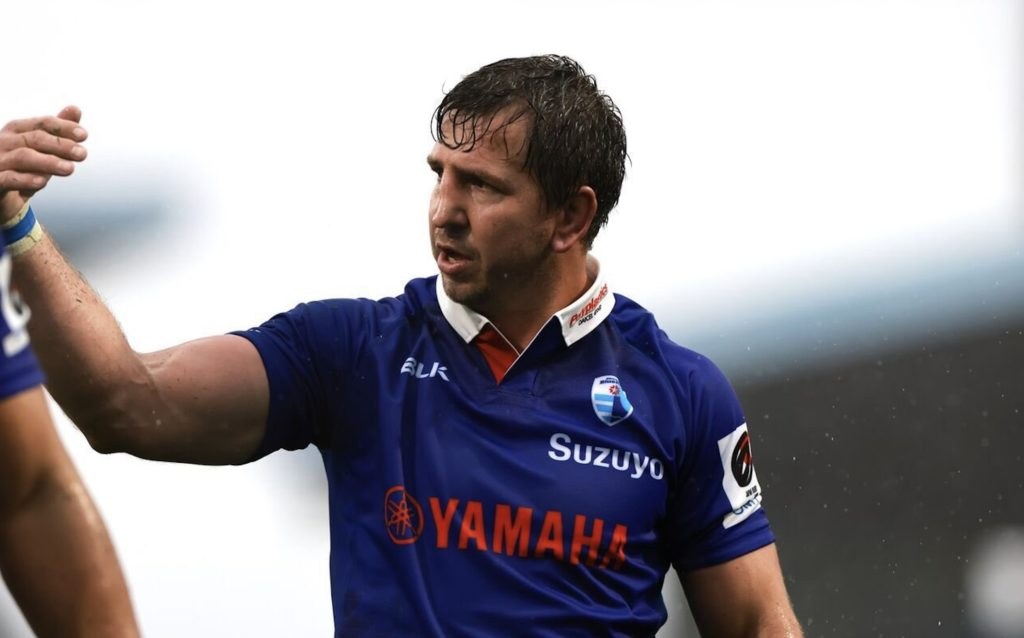
Smith left Shizuoka BlueRevs and signed a three-year deal with the Bulls.
MALCOLM MARX — BULLS
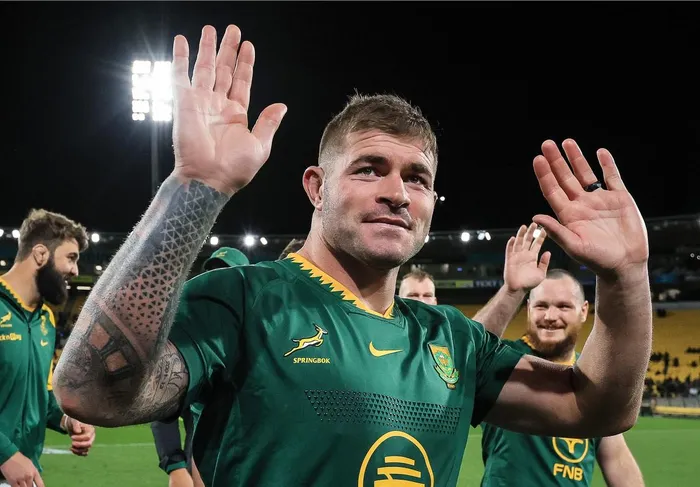
Marx is leaving Kubota Spears and will join the Bulls in July 2027, after completing his Japanese commitment.
MANIE LIBBOK — SHARKS
Libbok is set to join the Sharks in July 2027 after his contract with Hanazono Kintetsu Liners ends.
PIETER-STEPH DU TOIT — SOUTH AFRICA

Du Toit announced his departure from Toyota Verblitz with immediate effect and will return to South Africa after the Nations Championship tour. His next club destination has not yet been confirmed.
DAMIAN DE ALLENDE — POSSIBLE RETURN

Rugby365 reported on 9 November that De Allende and Du Toit are in discussions with the Boland Cavaliers. Boland coach Hawies Fourie confirmed that talks had taken place, but stressed that the move was not finalised and that financial and squad considerations remained.
So the accurate picture is six identifiable departures or confirmed returns, with De Allende a seventh name in the developing return story — not seven completed transfers.
That distinction matters.
But the wider movement is unmistakable.
Sources: Toyota Cheetahs — Faf de Klerk signing | Reuters — Marx and Libbok return announcements | The Citizen — Du Toit returns | Rugby365 — Boland talks with Du Toit and De Allende
Now consider the financial side.
A Planet Rugby report published on 8 November 2026, citing Rapport, says returning Springboks are accepting salary reductions of at least 50% on average.
One unnamed player's reported figures are particularly striking:
| Reported annual income | Amount |
|---|---|
| Japanese rugby contract | R18 million |
| South African rugby package | R6.5 million |
| Difference | R11.5 million |
| Reduction in direct rugby income | 63.9% |
The same report says the player could generate approximately R10 million through commercial opportunities outside rugby in South Africa.
Those figures are reported estimates, not published contract documents. The player's identity has not been disclosed.
But the arithmetic is clear: the reported South African rugby package is R11.5 million lower than the Japanese figure.
That is not a small adjustment.
The explanation offered by sources quoted in Rapport is that players based in South Africa remain more visible in local commercial circles. They can attend events, build relationships, expand their networks and remain relevant to sponsors.
In other words, the player is not necessarily choosing the highest rugby salary.
He is weighing the entire career.
Family, location, commercial work, playing opportunities, life after rugby and the final stages of an international career all matter.
And that brings us to the player-welfare question.
If a player has to make a major financial sacrifice to return home, it is not helpful to reduce the decision to a simplistic story about players enjoying an easy life in Japan.
These are professional athletes making complicated decisions about their careers and families.
There is another example unfolding in France.
South African-born centre Jeremy Ward, formerly of the Sharks and a former Junior Springbok captain, was included in France's extended 42-man squad in October 2026.

He was not eligible to play for France in November. He had not completed the required five-year registration period.
But France wanted him in its environment as a training partner, with eligibility potentially arriving in 2027.
That is another example of the global movement of rugby talent.
France can recruit and develop a South African player. Japan can recruit a South African player. English clubs can recruit South African players. South African franchises can recruit players from elsewhere.
That is the professional game.
The same applies to coaches.
Dave Rennie coached in Japan before moving into the All Blacks coaching setup. Eddie Jones has coached multiple national teams and clubs across several countries. International rugby is built on the exchange of people, expertise and experience.
The question is not whether countries should develop local talent. They absolutely should.
The question is why the presence of foreign talent is sometimes celebrated as a sign of a competition's quality, and at other times treated as though it is a threat to the sport.
A strong league can do both: attract international stars and create opportunities for domestic players.
Those objectives are not automatically incompatible.
Source: Rugbyrama — Jeremy Ward and his France eligibility, 21 October 2026
This is where the conversation needs to move beyond Eddie Jones.
Japanese supporters lose the opportunity to watch some of the world's best players.
The clubs lose experienced internationals who have helped them compete at the highest level.
Young Japanese players lose access to daily training alongside World Cup winners and established Test players.
The league loses some of the international recognition that comes with having globally famous rugby names in its competition.
Businesses and sponsors lose opportunities to associate their brands with players whose profiles reach well beyond Japan.
And South African rugby gains a collection of experienced players who can strengthen local franchises and mentor the next generation.
That is the exchange.
There is no evidence that the departure of these players is solely the result of Eddie Jones's comments. The players have personal, family, career and financial reasons for making their decisions.
But the debate surrounding foreign players has consequences beyond a coach's press conference.
If the message being received by overseas professionals is that their contribution is unwelcome, Japan risks making itself less attractive to the very talent that helped raise its competition's profile.
That would be a strange outcome for a league that has spent years attracting the world's best.
Let's be clear about what we are challenging.
Eddie Jones is entitled to want more Japanese players in Japan Rugby League One. He is entitled to push clubs to invest in local development. He is entitled to believe that the national team needs more Japanese-qualified players.
But the same standards must apply across the board.
Jones has worked internationally. He has coached outside his country of birth. He has benefited from the global movement of rugby knowledge and talent.
He has previously praised South African players in Japan for their preparation, their lifestyle and the advantage they provide the Springboks.
He later criticised the league for being crowded with foreign players.
Those are his documented words.
The separate claim that he called South Africans holidaymakers still requires the original recording.
So here is the question:
Is Eddie Jones genuinely concerned about the development of Japanese rugby — or has the argument about foreign-player numbers become a convenient way to take aim at South Africans?
Because if the issue is foreign recruitment, then it is a global issue. It cannot be reduced to one nationality.
And if the issue is player professionalism, then show us the evidence against the players being criticised.
Do not confuse a good lifestyle with a lack of commitment. Do not confuse a shorter season with a holiday. And do not pretend that the international players who helped build the appeal of a competition are somehow responsible for every problem in its domestic development system.
Japan deserves a strong national team.
Japanese players deserve opportunities.
But the Springboks who played in Japan deserve recognition for what they contributed, too.
The world of rugby is international. Eddie Jones's career proves it.
Perhaps the problem is not that South Africans went to Japan. Perhaps the problem is that Japan got used to having them — and now has to find a way to replace what they brought.
ALLEGATION IS NOT A FINDING. BUT A PATTERN OF PUBLIC COMMENTS DESERVES TO BE EXAMINED.
WE INVESTIGATE FIRST. WE COOK SECOND.