


Cover: the SA Rugby logo · sports journalist and investigator Graeme Joffe (@Joffersmyboy) · Western Province players celebrating
South African rugby is facing questions that extend far beyond the field.
Former South African Rugby Union (SARU) chief executive Jurie Roux was ordered to pay Stellenbosch University R37,116,402, plus interest and costs, following arbitration proceedings concerning university funds. The Western Cape High Court upheld the arbitration outcome after Roux challenged it, and a subsequent application for leave to appeal was unsuccessful.
Separately, Western Province Rugby Football Union (WPRFU) has been embroiled in a prolonged dispute over its finances, property and the financing arrangements surrounding Newlands Stadium. By March 2025, a creditor was reportedly seeking approximately R250 million, following an original financing arrangement involving approximately R112 million.
A separate High Court application, reported in April 2024, challenged SARU’s decision to place WPRFU under administration, the constitutional authority for that intervention and a transaction involving the professional rugby business and Red Disa Investments.
These are distinct legal matters. The available evidence does not establish that they form part of one coordinated scheme, nor does it establish that every official named in the disputes acted unlawfully.
But the documented court findings, substantial financial claims and unanswered questions about repayment and litigation outcomes demand scrutiny.
How did university funds move into rugby-related accounts without the required authority? What happened to the money ordered to be repaid? What is the current position of Western Province’s reported debt? And what ultimately happened to the legal challenge against SARU?
This investigation separates established court findings from reported claims and the questions that remain unanswered.
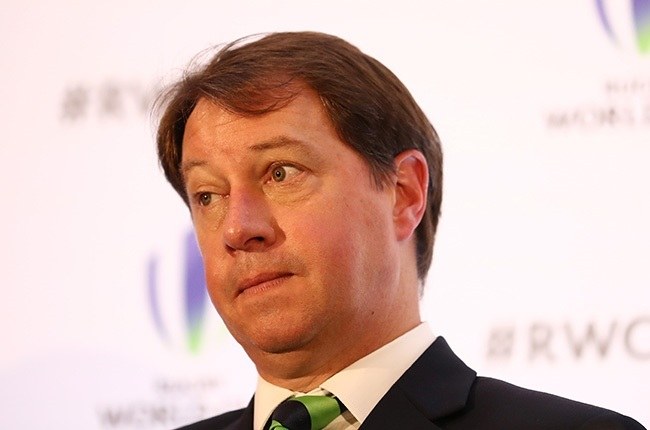
The strongest evidence in this investigation comes from the published High Court judgments in Roux v University of Stellenbosch and Others.
On 25 April 2023, the Western Cape Division of the High Court dismissed Roux’s application to review and set aside the arbitration awards. The court made the awards orders of court.
The principal amount awarded against Roux was R37,116,402, together with prescribed interest from 23 June 2015 until payment in full and legal costs.
The underlying dispute concerned financial transactions during Roux’s employment in Stellenbosch University’s finance department between 2002 and 2010, when he also held senior roles associated with Maties Rugby.
The published judgments describe findings made during arbitration and considered in the subsequent court proceedings. These were not merely allegations circulating on social media.
Primary source: Roux v University of Stellenbosch and Others — 25 April 2023 judgment
The case concerned the reallocation of university reserves into rugby-related cost centres without the required authority.
The High Court’s later account of the arbitration records findings that Roux had acted “deliberately, dishonestly and in bad faith” and had misappropriated his employer’s funds over a period of years. The judgment also records findings concerning the use of the university’s financial software in a manner intended to make the transactions more difficult to detect.
These were findings recorded in the judicial account of the arbitration. They should not be confused with a criminal conviction: the proceedings discussed here concerned civil liability and the recovery of damages.
The amounts recorded in the university’s claim and the arbitration outcome were:
The principal award is not a verified statement of the amount still outstanding today. The judgment provides for interest, and any subsequent payments, credits or settlement would need to be accounted for separately.
The judgments describe a mechanism involving transfers from the university’s unrestricted reserves into four rugby-related cost centres.
The university’s unrestricted reserves were subject to governance and budgetary controls. The arbitrators found that the transfers were made without the required knowledge and authority, bypassing ordinary decision-making and budgeting processes.
The court’s account describes the transactions as having been planned and executed covertly over a period of years.
The distinction is important. The case was not simply about a rugby programme overspending an approved budget. The findings concerned how funds were reallocated and the absence of proper authority for those transfers.
The judgments also examine the explanations advanced for the expenditure and why the arbitrators did not accept them as justification for the transactions.
One example discussed in the arbitration record concerned money that reached Roux’s personal account.
The explanation advanced was that the payment represented repayment of an amount the rugby club owed a student. The appeal tribunal’s account, however, linked the payment to rental allegedly owed by the rugby club to a person who was no longer a university student.
This was one element of the broader case. It does not mean that every transfer went to Roux personally.
Its significance is that the tribunal examined the actual purpose and destination of the payments rather than accepting the descriptions attached to them at face value.
The tribunal also examined expenditure described as bursaries where the underlying expenses were said to relate to rental and food for rugby players.
The question was not whether rugby players could legitimately receive financial support. It was whether university funds had been properly authorised and whether the recorded purpose of the expenditure accurately reflected the underlying transactions.
The arbitrators found that the explanations provided did not justify the transfers and their use.
The judgment also identifies expenditure from one of the relevant cost centres on categories including:
These examples appear in the tribunal’s account of how the reallocated funds were applied. They should not be treated as findings that every expense in every category was unlawful in isolation. The legal finding concerned the unauthorised transfers, their use and the resulting loss established in the proceedings.
The judgments do not provide, in the passages examined for this investigation, a complete transaction-by-transaction bank ledger identifying every originating account, destination account, date, recipient and authorisation status.
A full reconstruction would require the underlying KPMG report and the detailed arbitration exhibits and schedules.
Primary source: Roux v University of Stellenbosch and Others — 13 October 2023 judgment
The legal history establishes how the university’s claim progressed from the discovery of financial irregularities to an arbitration award and subsequent court proceedings.
The reported Constitutional Court decision is significant because the earlier High Court outcome was not overturned through that further appeal attempt.
However, a final legal obligation and proof of collection are two different things.
The current repayment position remains unverified in the material available for this investigation.
The evidence establishes that repayment was ordered and that Roux’s attempts to overturn the award were unsuccessful. It does not establish how much Stellenbosch University has subsequently recovered, whether a settlement was reached or what balance remains after interest, costs and any payments.
It would be inaccurate to state that Roux has definitely paid nothing. It would also be inaccurate to state that exactly R37 million remains outstanding in October 2026.
The principal amount is subject to interest from June 2015. A reliable current balance requires the university’s accounting of payments and recoveries, together with the applicable interest calculation.
The decisive next document is a written statement from Stellenbosch University confirming the amount recovered, the current balance and any enforcement steps.
The Roux judgment is not the same case as the Western Province property and financing disputes. The two matters must not be presented as one proven scheme.
However, the financial history of WPRFU is central to understanding why the provincial union’s administration, property and professional-business arrangements became the subject of litigation.
Reporting by Daily Maverick describes an arrangement in which Dream World Investments advanced approximately R112 million to WPRFU in 2020. The financing was linked to property security and formed part of a wider dispute over Newlands and the union’s financial position.
The funds were reportedly used to settle debts to Investec and Remgro. The subsequent dispute over the property arrangements created substantial financial and legal exposure for WPRFU.
By March 2025, Daily Maverick reported that Dream World was seeking to recover approximately R250 million.
That figure must be treated accurately. It is a reported creditor claim, not automatically a final judgment debt or a verified statement of the current amount recoverable.
The figures represent different things:
The difference between the original financing and the later claim requires examination of the contracts, interest calculations, legal costs, payments and relevant court orders.
Source: Daily Maverick — Western Province creditor seeks repayment of reported R250 million debt
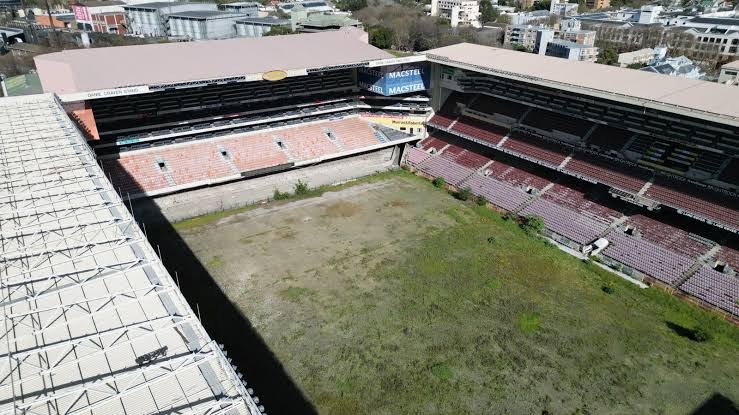
Newlands Stadium was owned by WPRFU. The Stormers’ move to DHL Stadium in Cape Town left the union facing questions about the future of its historic property and the debt associated with its financing arrangements.
The proposed sale or development of Newlands became entangled with creditor interests, property security, union governance and objections to the arrangements.
The financial significance is clear: a property transaction could affect the union’s ability to meet its obligations, but the sale itself would not prove that the debt had been settled.
Three separate questions remain:
The material reviewed for this investigation does not establish a completed Newlands property transfer or a final creditor accounting.
That has not been established.
The reporting identifies WPRFU as the party associated with the financing and creditor claim. SARU’s role in administering WPRFU does not automatically make SARU personally liable for WPRFU’s debts.
Any separate liability on SARU’s part would require its own contractual or legal basis, supported by the relevant agreements, guarantees, pleadings and court orders.
SARU placed WPRFU under administration amid serious financial and governance concerns.
SARU’s position was that the union was in a dire financial situation and required intervention to stabilise its operations. The dispute later became a wider legal and constitutional question: did SARU have the authority to impose the intervention in the manner it did, and were the decisions taken during the administration valid?
The administration placed the relationship between the national governing body and the provincial union under scrutiny.
A 102-page High Court application was reported in April 2024. The applicants challenged SARU’s intervention, the suspension of former WPRFU president Zelt Marais and the transaction involving Red Disa Investments and the professional rugby business.
The contemporary IOL/Cape Argus report identifies the applicant as the African Restoration Party (ARA), led by Jerome Swartz, with co-applicants including William Fischer. Other descriptions have used a different expansion of the ARA name. The precise registered name should be confirmed against the actual court file before definitive identification of the applicant.
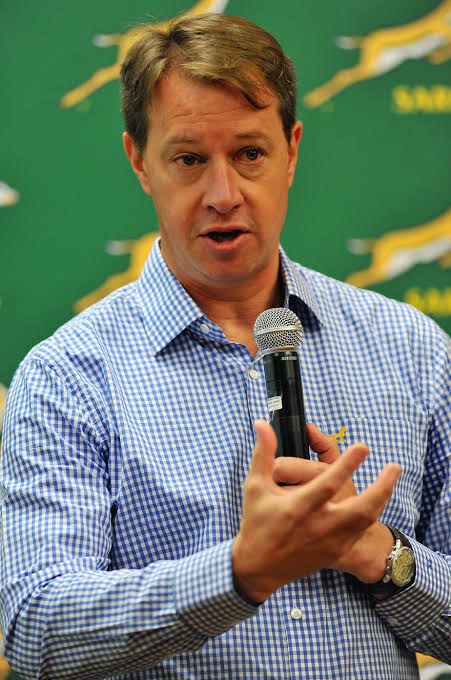
The reported respondents included SARU, WPRFU, SARU president Mark Alexander, former SARU chief executive Roux, Rian Oberholzer, Peter Jooste, Red Disa Investments and other parties.
The remedies reportedly sought included:
These are the remedies reported as sought by the applicants. They are not findings that the challenged decisions or transactions were unlawful.
Source: IOL/Cape Argus — WP Rugby challenged in High Court over administration and private-equity deal
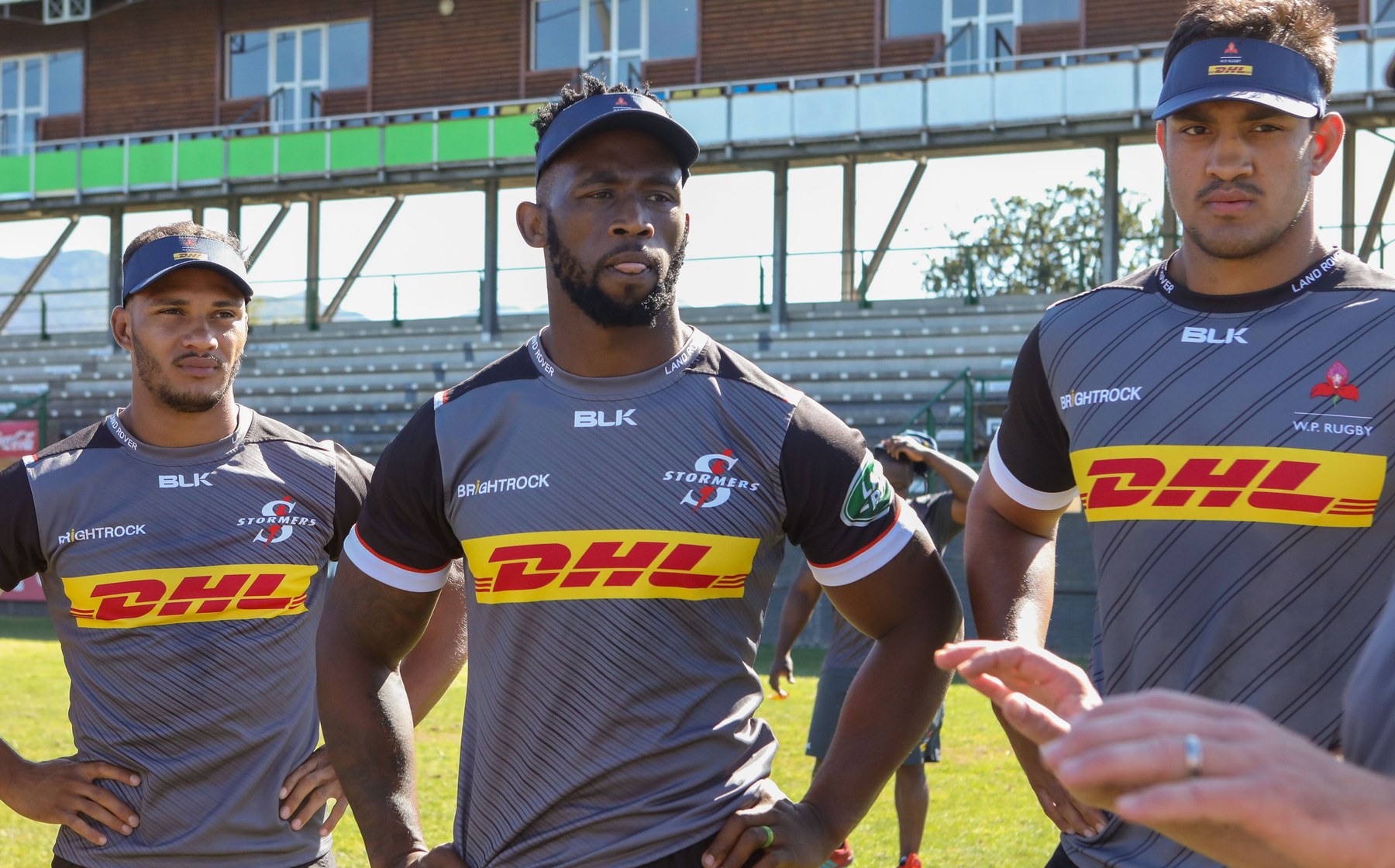
In March 2025, SARU announced that it would end the WPRFU administration process.
Reporting said the professional investment and move to DHL Stadium had been completed, while the remaining property responsibilities reverted to WPRFU.
That development did not, by itself, resolve the Newlands financing dispute or establish that the applicants in the ARA proceedings had won their case.
An administration can end through an organisation’s own processes without a court ruling that the original intervention was unlawful.
This remains one of the most important gaps in the public record assembled for this investigation.
The April 2024 filing is documented in contemporary reporting, but the final order or judgment in that application has not been independently retrieved here.
It is therefore not possible, on the available material, to state conclusively whether the application was granted, dismissed, withdrawn, settled or remained unresolved.
Nor has the specific late-October 2026 hearing mentioned in social-media reporting been independently corroborated by a verified court roll or court order.
Before publishing a claim that SARU is appearing in court this week, the case number, hearing date and current procedural status must be confirmed with the Western Cape Division of the High Court.
The required record is the complete court file: the notice of motion, founding and answering affidavits, replying affidavit, heads of argument, interlocutory orders and final order or judgment.
There is a documented historical connection between the university case and rugby-related expenditure.
The Roux judgment records that R1,804,398 of the university’s claim concerned expenditure associated with Western Province Rugby or the Western Province Rugby Institute.
That is a specific financial connection recorded in the university proceedings.
It does not establish that the later Newlands financing dispute, the Red Disa transaction or the ARA litigation formed part of the same scheme. Those are separate events, occurring at different times and involving different legal issues.
To establish a further connection, investigators would need to examine corporate records, contracts, financial statements, directorships, bank records where lawfully available, and the actual court papers in the Western Province litigation.
The distinction matters. Overlapping institutions and officials justify scrutiny, but they do not prove a common plan or shared liability.
The university proceedings also produced a separate award against Chris de Beer for R1,904,511 plus interest.
That is a distinct monetary order. It should not automatically be added to Roux’s award and described as additional money taken under the same transactions without examining the separate claims and their legal basis.
The university’s published arbitration announcement and the underlying award are relevant sources for the amounts and procedural history.
Source: Stellenbosch University
This investigation relies on a hierarchy of evidence. Published judgments establish what courts decided. Contemporary reporting helps reconstruct events and identify proceedings. Social-media posts may provide leads, but they cannot substitute for the underlying record.
What it establishes: The High Court dismissed Roux’s review application and made the arbitration awards orders of court.
What it establishes: Roux’s further application for leave to appeal was dismissed, with costs. The judgment records the court’s treatment of the legal arguments and the arbitration findings.
What it should establish: The detailed findings, calculations and underlying financial schedules.
University-hosted arbitration award PDF
The linked PDF has not been independently retrieved in full for this investigation. The detailed transaction schedules therefore remain a priority for further examination.
What it should establish: The exact parties, legal grounds, factual allegations and remedies sought in the challenge to SARU’s administration and the professional-business transaction.
Read the contemporary IOL/Cape Argus report
The full application and a verified final order have not been independently retrieved.
What it helps establish: The reported financing history, property security, creditor claim and efforts to recover the debt.
Read the Daily Maverick report
The latest enforceable balance remains unverified.
The legal obligation is documented. The current payment history and outstanding balance are not.
Stellenbosch University should be asked to confirm in writing:
Without that information, neither “he has repaid nothing” nor “the full R37 million remains outstanding” is a verified conclusion.
The filing and reported remedies are documented, but the final disposition has not been independently established here.
The Western Cape Division registry should be asked to confirm:
That record is essential before claiming that SARU has won or lost the challenge, or that a particular hearing is taking place in October 2026.
The reported R250 million claim needs to be reconciled with the original financing, interest, costs, payments, security and any subsequent transaction.
The documents needed include the financing and security agreements, relevant court pleadings and orders, WPRFU’s latest available financial statements, any binding Newlands sale agreement, transfer records and the final accounting of sale proceeds.
Until those records are obtained, the reported claim must not be described as a verified current balance or as a debt automatically owed by SARU.

The Roux matter is supported by published court judgments. The High Court upheld an arbitration award requiring him to pay Stellenbosch University R37,116,402, plus interest and costs, and a subsequent application for leave to appeal was unsuccessful. The judgments record findings of deliberate, dishonest and bad-faith misappropriation of university funds.
The available evidence does not establish how much of that award has since been collected.
The Western Province disputes are also grounded in documented financial and legal events. WPRFU was placed under administration in 2021, a constitutional challenge was reported in April 2024, administration ended in March 2025, and a creditor was reported to be seeking approximately R250 million in connection with the Newlands financing dispute.
But the final outcome of the ARA application, the current creditor balance and the completed legal and financial position of Newlands have not been established by the primary records retrieved for this investigation.
The distinction is fundamental: a court finding, a creditor’s claim, an allegation in an application and an unanswered repayment question are not interchangeable.
The evidence raises serious questions about financial controls, governance, accountability and transparency in major rugby-related transactions.
The next step is to obtain the missing court orders, financial statements and repayment records.
The R37 million award has a documented judicial history. The Western Province debt dispute has a documented litigation history. The outstanding task is to establish what was paid, what remains owed and how the court challenge ultimately ended.
ScrumAtMe will distinguish established findings from allegations and continue to follow the public record as the outstanding documents become available.