


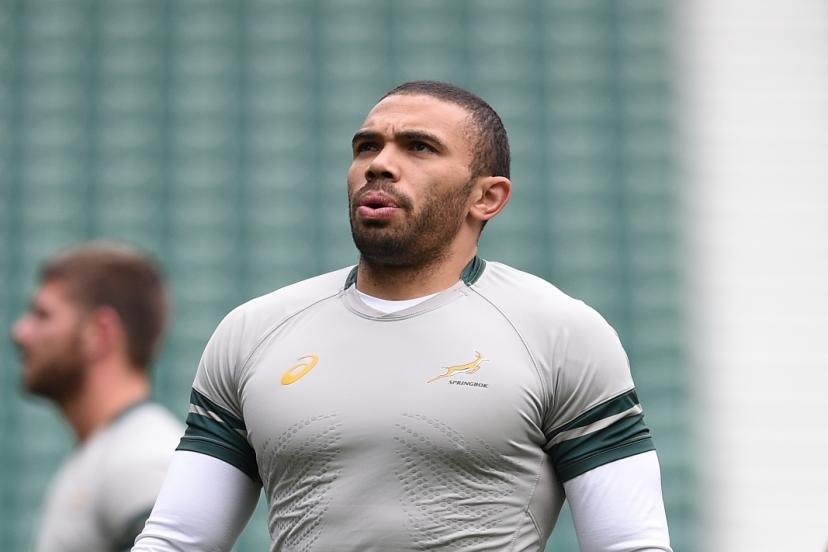
Eish, Bryan Habana. The man used to leave defenders grabbing at air. Now the Springbok speedster is in fintech — and the comments section wants to know whether his latest venture is tackling loan sharks or swimming a little too close to them.
Habana is co-founder and Chief Client Officer of Paymenow, the earned-wage-access platform he started in 2019 alongside CEO Deon Nobrega, CTO Willem van Zyl and CDO Gerbrand Potgieter. The pitch, which he delivered on stage at the BPC Client Conference this month under a slide reading "The second career: from the pitch to fintech": workers run out of money before payday and fall into "costly short-term debt," so Paymenow lets them tap a slice of wages they've already earned instead of running to a mashonisa.
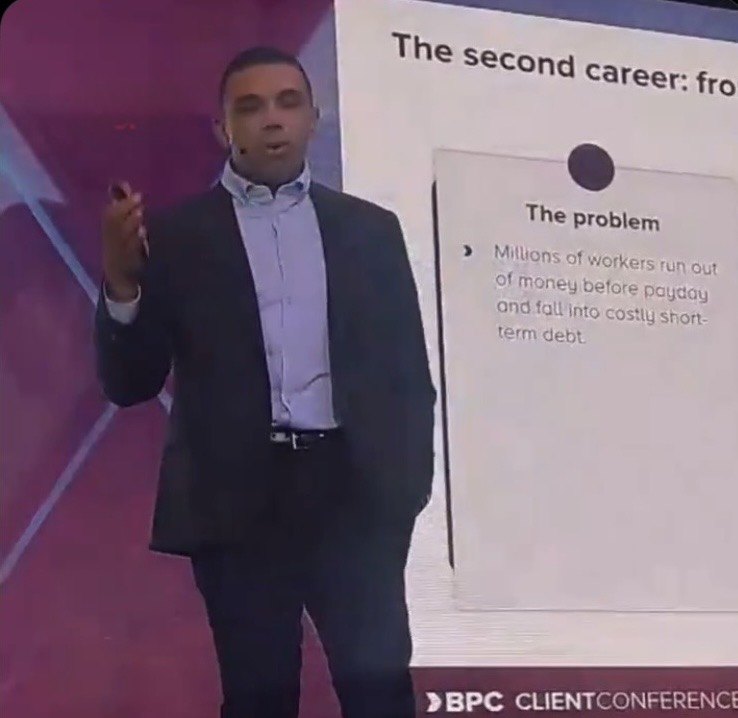
Noble. Except the streets watched that clip and asked a sharper question: if you have to pay a fee to reach money you already earned, is that financial wellness — or just a cleaner way to make money off people who are broke before month-end?
Per ITWeb (Nov 2025), Paymenow had scaled to 400+ employer clients and 600,000+ employees, with 55% year-on-year transaction growth into 2025 — and after a 2026 merger with PayCurve the combined platform is pushing 750,000+ users. In July 2025, Standard Bank extended a R400 MILLION working-capital facility to fund the wage advances (that's a credit line for the business, not profit, and it doesn't mean Standard Bank owns them — but it tells you the size of the machine behind the "simple app"). The money behind it: ~R4m equity from ViaMedia/DigiCo back in 2020, plus an RMB R250m debt facility (2023). There's no public shareholder register, so nobody can tell you exactly who owns what slice — founders included.
Translation: hundreds of thousands of low-to-middle-income workers, a R400m engine, growing 55% a year. Whatever this is, it's at scale.
The backlash is real and it's on the record, under Sunday World's clip of the talk (66K views). A sample, verbatim:
Not everyone swung: "Capitec started out giving out pay day loans. He's on the right track," said @m00Gale. Fair. But "mashonisa in suits" was the room's mood, not one troll.
Paymenow's own employee FAQ confirms a cash-out carries a service fee AND a transaction fee, with an instant-payment option that costs more (cash withdrawals run roughly double a voucher draw). The company stresses: no interest, no compounding, no subscription, costs shown before you confirm. Its own worked example is the tell — withdraw R500 now, and your next payslip is R500 lighter, plus the fees. So the emergency gets solved today, and next payday shrinks. And now the number that should be on every slide but isn't: what does it actually cost?
The machine:
| Number | What it tells us | Source |
|---|---|---|
| 2019 | Year Paymenow was founded (Habana + Nobrega) | Business Day |
| 600,000+ employees | Reported reach by Nov 2025 — not simultaneous borrowers | ITWeb |
| 400+ companies | Employers on the platform | ITWeb |
| 55% growth | YoY transaction growth 2024→2025 (activity, not profit) | ITWeb |
| R400 million | Standard Bank working-capital facility, July 2025 (financing, not revenue) | Business Day |
| R250 million | RMB debt facility, 2023 | Business Day |
The fees — and the loan-shark comparison:
| Number | What it means | Source |
|---|---|---|
| ~5% | Paymenow's average fee per transaction (on ~US$60): 4% service + R10–R30 EFT. Historical (c.2020), not a verified current tariff. | BFA Global |
| 27% | The payday-lender cost comparator in that same report | BFA Global |
| R350, ×2/month | Paymenow's average cash-out and frequency → ~R8,400 accessed/year over 24 draws | J.P. Morgan |
| R600/year | Paymenow's Sept 2026 illustration: short R2,000/month, ~R50/draw × 12. Company illustration. | Paymenow |
| ~R3,940/year | Paymenow's estimate of what 12 short-term loans of R2,000 would cost in fees + interest | Paymenow |
| 25% / 15–18% | Access cap (up to 25% of net salary); typical users draw 15–18% of earned wages | Paymenow |
What the surface numbers show: At the historical ~5% fee, a R350 draw costs about R17.50; twice a month, ~R420 a year in fees on R8,400 pulled forward. Against the payday comparator (27%) and Paymenow's own R600-vs-R3,940 illustration, the sticker price cuts in the company's favour — it looks cheaper than a loan or a mashonisa. Which is exactly where the educated critics say: look again.
Here's the missing piece, and it's why serious people — not just an angry timeline — reach for the word "shark." The critique was never about the sticker price. It's about three things the sticker price hides: the APR once you annualise it, repeat use, and whether this should count as credit at all.
Start with APR, because a fee means nothing without a time period. A flat ~5% to reach wages ~10–15 days early annualises into triple digits — 5% × (365 ÷ 15) ≈ 122% APR, and ~182% at 10 days early. Illustrative (it depends on the real current fee and how many days early) — but it's the standard method, and it's now backed by hard data: a US Congressional Research Service summary of CFPB research put employer-integrated EWA at a 109% average effective APR, on fees averaging just $2.60 a transaction / $69 a year. Tiny in dollars; loan-shark in APR. (US-market data — NOT Paymenow's number — but it shows precisely how a "small fee" and a "huge APR" live inside the same product.)
Then the model. In October 2024 the US Center for Responsible Lending published a report literally titled "A Loan Shark in Your Pocket," arguing some earned-wage and cash-advance apps replicate payday lending through fees, repeat advances and paycheck erosion. (Its findings concern US providers, not a direct audit of Paymenow — but it's where the exact phrase the streets are using comes from.) And it isn't only an American worry: a January 2024 IOL report quoted South African debt experts warning early wage access can become a recurring trap — you survive this month, but start the next one short because part of that salary is already spent.
The decisive distinction: the criticism is about economic function, not the advertised fee. A product can carry zero "interest" and still have workers paying, again and again, to bridge the same monthly hole — which is why researchers look at repeat transactions, total annual fees, how much each draw shrinks the next payslip, and whether users end up leaning more on other credit. And on Paymenow's own J.P. Morgan data — R350, twice a month, 24 draws a year — the repeat-use pattern the experts worry about is simply the usage pattern.
What we will not do: paste those US APR and harm figures onto Habana's South African business. They are not Paymenow's numbers, and honesty is the whole job. What we can say: the loan-shark comparison isn't ignorance — it's a recognised, researched critique of how earned-wage access functions — and the only things that would settle whether Paymenow clears it or fails it are its current rand fee schedule and independently verified repeat-use outcomes. Which it hasn't published.
The mechanics write themselves. Worker hits a transport or electricity gap mid-month → draws wages early → payday lands lighter by the draw plus the fee → the gap reopens sooner next month → draw again. Not compounding interest. But a cycle — your financial pressure shuffled around the calendar, with a toll booth on every lap. Does every user fall in? No. Is it proven Paymenow causes mass distress? No. But the company itself admits early access doesn't fix why people are short — low pay does — which is exactly what @Slqjay1 and @MolefiLebone ("what would help is to be paid twice a month") were shouting.

A loan shark lends money on exploitative terms, usually outside the law. Paymenow's product is structurally different: your own earned wages, a fee not interest, recovered through payroll. Those differences are real, and you can't brand a company an illegal lender just because it charges a fee. Critically: no NCR action, no regulatory finding, and no court has called Habana or Paymenow a loan shark. The label, on today's evidence, is a public opinion — a loud, and now research-backed, one — not a legal fact.
But "financial wellness" isn't a force field against scrutiny, and there's a twist that makes this fair game: Habana himself, in a reported 2023 interview, said that when Nobrega first pitched him in 2019 he hesitated — worried it could be seen as "predatory or abusive" and damage his brand. The exact fear now trending under his own video. More recently he's reportedly gone to LinkedIn to defend the fees — flat fee, no interest, no compounding, costs disclosed upfront, and pointedly no surcharge for being financially vulnerable — and invited people to interrogate the business. Good. Consider this us accepting the invite.

And here's the chapter that makes this whole debate land differently. On the Business of Sport podcast in December 2025, Habana revealed that his father, Bernie, managed his commercial earnings for eight years — until he discovered money from sponsorship deals had allegedly been diverted into his father's personal account. He believed a trust had been set up to protect those earnings; he later found it had not been established as he understood. When he went to draw his savings for a deposit on his dream home in Cape Town, the money never arrived, and he had to arrange bridging finance. He says he never saw the money from his Gillette endorsement. The fallout effectively ended the relationship in 2010. Now, as co-founder of a platform that charges fees for early access to earned wages, Habana sits on the other side of a financial-trust debate — when people are financially vulnerable, who controls the money, who profits from the arrangement, and how do we know the system is working for them? None of that establishes any wrongdoing by Paymenow. It just makes transparency and accountability the exact questions a man who lost years of earnings to an opaque arrangement should welcome. (He has said he lost a significant amount over those eight years; the reporting doesn't pin a reliable total, so we won't invent one.)
Calling Bryan Habana a confirmed loan shark goes past the evidence, and we won't do it. Asking whether his business model carries loan-shark economics — charging the financially squeezed to reach their own wages, at a flat fee that annualises into triple-digit APR territory, monetised on repeat, outside the Credit Act's protections? That question is wide open, it's backed by real research, and the man's own early doubts put it there.
Three numbers turn this from a hot take into a case. Paymenow, the floor is yours:
Show us those, and we'll show the workers whether this is a lifeline or a toll road. Until then: the Springbok legend built a business to fight the sharks. The streets just want to know he didn't become one.
Right of reply: Paymenow is invited to respond on its fee schedule, repeat-use data, NCR/National Credit Act status, and evidence of consumer outcomes. US and international research is cited to explain the earned-wage-access debate and is not attributed to Paymenow. The "loan shark" characterisation is attributed public commentary and a question under investigation — not a finding of unlawful conduct.
ScrumAtMe — Comedic Technical Analysts. Real rugby news. Weaponised into comedy.