
Rachel Kolisi once ran the Kolisi Foundation.
Not worked around it.
Not occasionally posted it.
She co-founded it with Siya Kolisi.
She became CEO in September 2022. The Foundation's own annual reports subsequently listed Rachel as CEO, co-founder and board member, with Siya as co-founder and board member.
And this wasn't some random charity attached to a famous surname.
The Foundation says its mission includes addressing gender-based violence, alongside food security, education and sport.
Then things went left.
RACHEL KOLISI TOOK ON THE KOLISI FOUNDATION
In February 2025, Rachel left her role as CEO.
A month later, papers lodged at South Africa's Commission for Conciliation, Mediation and Arbitration revealed something considerably more dramatic.
Rachel was taking on the board of the organisation she helped create.
Her complaint, filed on 25 March 2025, alleged constructive dismissal — essentially that the working environment created by her employer had become intolerable enough to force her resignation.
She reportedly sought reinstatement or compensation.
Read that again.
The former wife of the Springbok captain.
Taking the board of the Kolisi Foundation to the CCMA.
A Foundation she co-founded.
A Foundation she ran.
A Foundation carrying the same surname she still carries today.
Nahhh mayne.
NOW WE HAVE A RUGBY STORY.
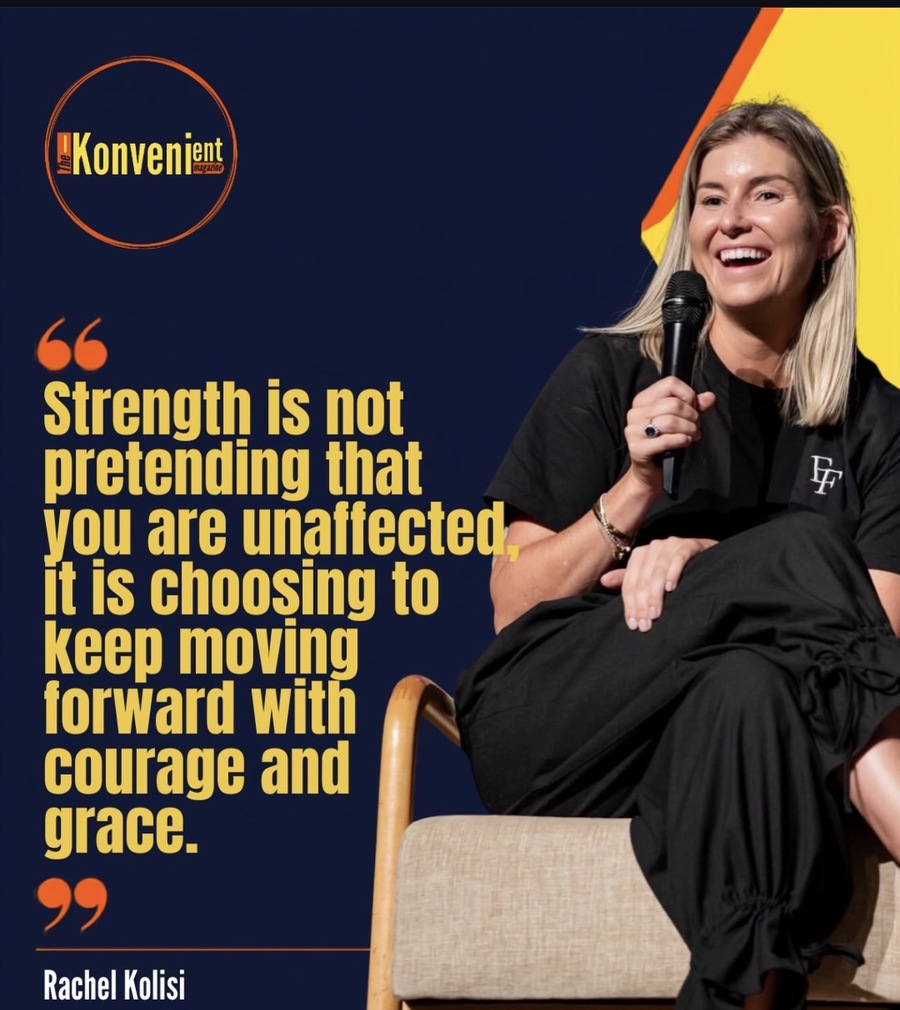
BECAUSE RACHEL DIDN'T LEAVE PHILANTHROPY
This is where things become interesting.
Rachel's own current platform describes philanthropy as her life's work.
She says she spent five years building programmes at the Kolisi Foundation across food insecurity, education, sport and gender-based violence, and speaks explicitly about ensuring resources reach people who need them.
Fair enough.
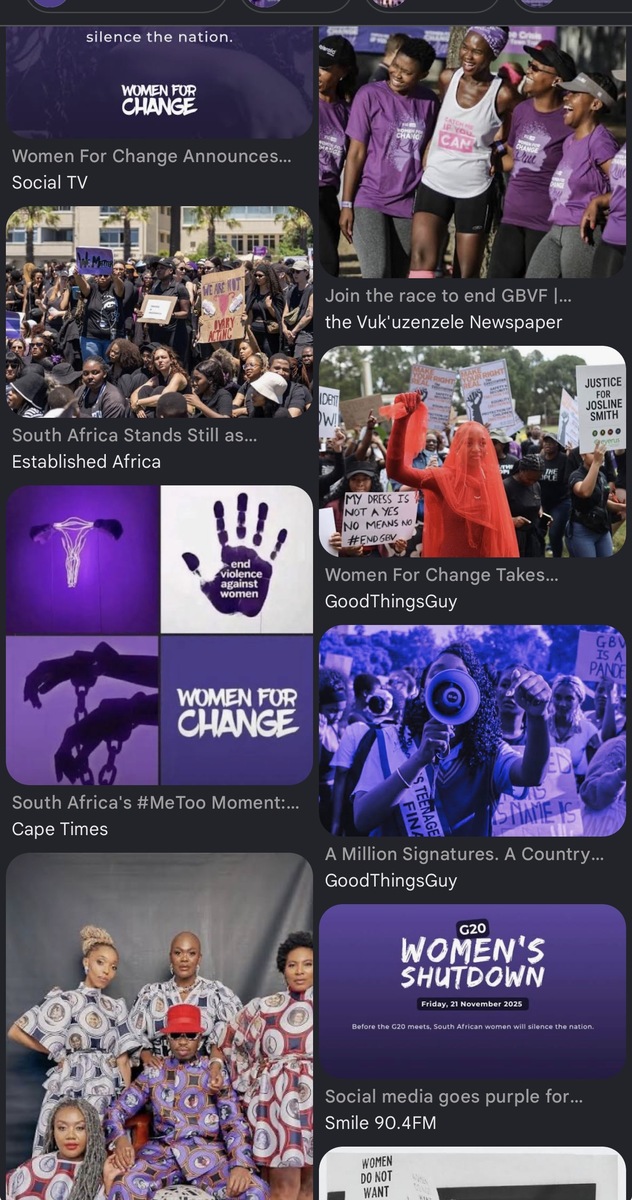
But Rachel has also publicly operated in the same advocacy ecosystem as Women For Change.
In 2023, she promoted a Women For Change petition concerning the parole of Alison Botha's attackers.
Siya publicly supported Women For Change's purple campaign in 2025.
And in 2026 Rachel and Women For Change founder Sabrina Walter appeared within the broader programme of the Artscape Women's Humanity Festival.
Now Women For Change itself is under public scrutiny.
And this is where we stop looking at Instagram captions.
OPEN THE SPREADSHEET.
R337,968 → R2,116,715
Women For Change's published numbers are extraordinary.
Revenue:
R337,968 → R2,116,715.
+526%.
Salaries:
R138,544 → R650,064.
+369%.
Consulting:
R10,200 → R53,938.
+429%.
Local travel:
R7,564 → R127,896.
+1,591%.
Entertainment:
R8,089 → R20,908.
+158%.
The expenditure category labelled “Donations”:
R24,400 → R7,200.
−70%.
And the organisation moved from a R240 deficit to a R567,523 annual surplus.
Now we're talking.
Not because those numbers prove fraud.
They don't.
But because when an organisation built around one of South Africa's most emotionally powerful issues increases its income by more than R1.7 million in a year, the next question isn't complicated:
WHAT CHANGED FOR WOMEN?
Women For Change reports huge reach.
More than 1.1 million petition signatures.
More than 2 billion earned impressions.
Around 750,000 purple profile-picture changes.
More than 250 femicide and GBV case posts.
Twelve volunteer Survivor Support Specialists.
A WhatsApp Survivor Support Line.
And “thousands” of people reportedly supported through email, social media and direct messages.
Those are massive numbers.
So let's ask the next question.
How many women?
Not impressions.
Women.
How many survivors received substantive assistance?
What does “supported” mean?
What was the outcome?
What system exists today because the money arrived?
What was built?
That's where this story lives.
AND THEN THE MONEY GETS MORE INTERESTING
Women For Change's 2025/26 accounts show:
R650,064 — salaries
R335,762 — Survivor Support Line
R182,682 — purchases
R127,896 — local travel
R53,938 — consulting
R39,876 — printing and stationery
R27,701 — subscriptions
R20,908 — entertainment
R17,371 — computer expenses
R15,876 — accounting
R13,400 — advertising
R9,637 — staff welfare
R7,200 — donations made
R5,725 — legal expenses
We're not going to tell readers what to think about that list.
Look at it.
Then ask the organisation what each category produced.
WAIT. BACKABUDDY?
This one needs an explanation.
The public BackaBuddy campaign page reports approximately:
R585,305 raised online.
R391,390 recorded as offline donations.
503 unique donors.
Women For Change's 2025/26 financial statements identify:
R32,839 — BackaBuddy income.
Those figures may cover different periods or accounting categories.
Fine.
Then reconcile them.
How much money did BackaBuddy actually transfer?
When?
Which financial year?
Which accounting line?
Four questions.
This shouldn't require a Netflix documentary.
AND THE ACCOUNTS THEMSELVES?
Compiled.
Not independently audited.
The accountant says the financial statements were prepared from information supplied by management.
The accountant did not verify the accuracy or completeness of that information.
No audit opinion.
No independent-review conclusion.
Again:
We're not going to think for you.
That's the accounting status.
Do with it what you will.

NOW BRING BACK THE KOLISI NAME
This is where ScrumAtMe belongs in this story.
Because otherwise we're suddenly an accounting magazine.
And nobody asked for that.
Rachel Kolisi promoted Women For Change while carrying perhaps the most commercially and culturally recognisable surname in South African rugby.
KOLISI.
Did that help the message travel?
You don't need a PhD in marketing to understand why celebrity endorsement matters.
But can we put a number on Rachel's contribution to Women For Change's growth?
No.
Can we establish that she deliberately kept the surname to benefit Women For Change?
No.
Rachel has publicly given a different explanation: it remains her children's surname and retaining it helps preserve a shared family identity.
Fine.
But the question isn't whether she's allowed to use it.
Of course she is.
The interesting question is:
WHAT IS THE KOLISI NAME WORTH?
Because Rachel's current life demonstrates exactly how powerful a public platform can become.
National promotional tour.
Documentary.
Memoir.
Brand partnerships.
Luxury SUV.
Polished social content.
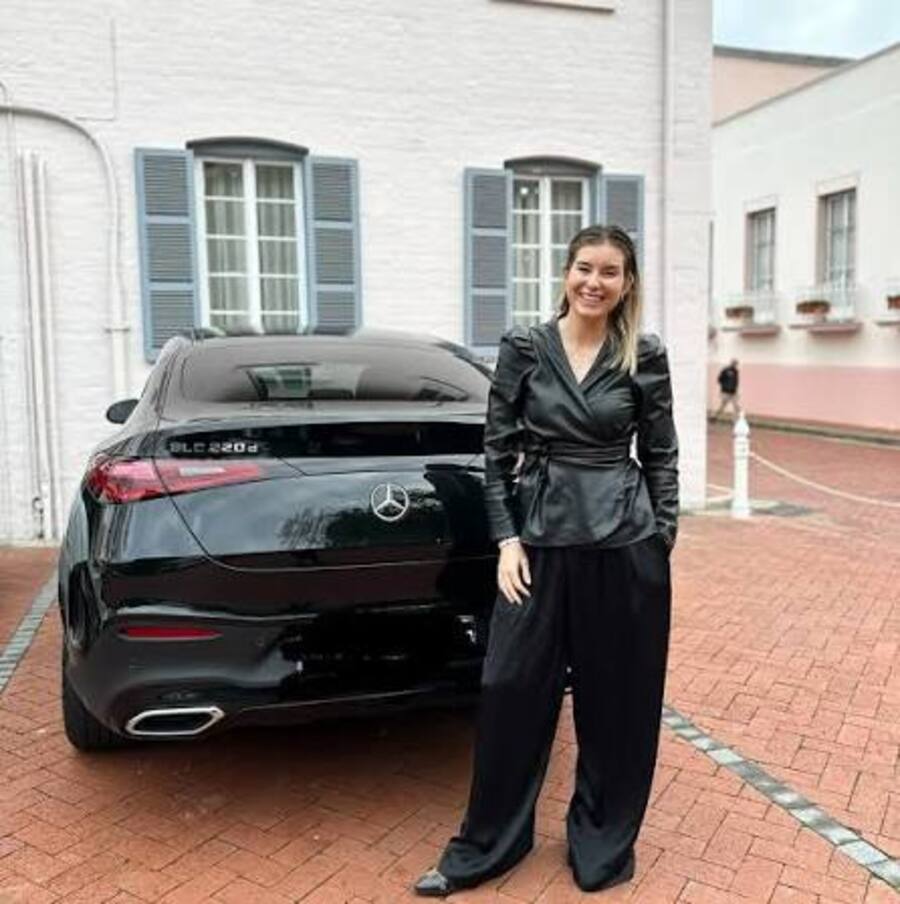
And that vehicle isn't some mystery purchase we're going to pretend came from donations.

Rachel is a Jetour brand ambassador, and Jetour co-sponsored her Falling Forward national roadshow.
That's business.
But it's also evidence of something else:
Rachel Kolisi has influence.
Real influence.
Commercial influence.
Media influence.
Advocacy influence.
And when that influence is lent to a charitable cause, it has value.
SO HERE'S THE WEIRD PART
Rachel helped build the Kolisi Foundation.
The Kolisi Foundation works on GBV.
Rachel became its CEO.
Rachel then left.
Rachel then filed a constructive-dismissal complaint against its board.
Rachel continued building her own philanthropic platform.
Rachel had previously amplified Women For Change.
Women For Change then experienced extraordinary financial and audience growth.
And now Women For Change is facing questions about what that growth actually delivered.
THAT'S THE STORY.
Not:
“Rachel stole money.”
We don't have that story.
Not:
“Women For Change is a scam.”
We don't have that story either.
What we have is considerably more interesting.
A SPRINGBOK SURNAME.
TWO PHILANTHROPIC WORLDS.
A CCMA FIGHT.
MILLIONS OF RANDS.
MILLIONS — ACTUALLY BILLIONS — OF CLAIMED IMPRESSIONS.
And one very simple question:
WHAT ACTUALLY CHANGED?
That's enough.
We don't need to tell South Africa what conclusion to reach.
Put the documents on the table.
Put the numbers beside them.
Put the public claims beside the numbers.
Put the photographs beside the public image.
Then let everybody talk.
CAMERAS OFF. TALK.
Rachel Kolisi's public story has travelled an extraordinary distance.
Springbok wife.
Philanthropist.
Kolisi Foundation co-founder.
CEO.
Former CEO.
CCMA complainant against the Foundation's board.
Author.
Documentary subject.
Brand ambassador.
Independent public figure.
And throughout that evolution, one theme keeps appearing:
helping people.
Good.
Then this shouldn't be difficult.
Women For Change says it has supported thousands.
Show us.
It says its campaigns generated more than two billion earned impressions.
Show us what those impressions produced.
Revenue increased 526%.
Show us what changed.
Salaries increased 369%.
Show us what was built.
Travel increased 1,591%.
Where did we go?
BackaBuddy's public numbers and the annual-account figure look dramatically different.
Reconcile them.
And Rachel?
You helped build one of South African rugby's most recognisable philanthropic brands.
You promoted Women For Change.
You understand better than almost anybody what the Kolisi name can do when attached to a cause.
So maybe the most interesting question isn't whether the surname helped.
Maybe it's this:
WHAT DID ALL THAT ATTENTION ACTUALLY ACHIEVE?
We opened the files.
Now show us the work.
ScrumAtMe — Comedic Technical Analysts.
Real rugby news. Weaponised into comedy.