
Scrum At Me / The Daily Scrum · 19 September 2026
New Zealand Rugby has a problem.
Not a “we lost a Test match” problem.
Not a “Rassie figured us out” problem.
A money problem.
A leaked internal NZR document, reportedly titled Rugby System Programme – Rugby Summit Pre-read, projects combined losses of roughly NZ$66 million between 2027 and 2031.
And somehow, that number might not even be the scariest one.
NZR is reportedly heading toward a NZ$27 million net loss in 2026. The organisation is looking for around NZ$20 million in annual savings from 2028. The leaked material describes the current model as “clearly unsustainable.”
Read that again.
Clearly. Unsustainable.
This is New Zealand Rugby.
The All Blacks.
The black jersey.
The haka.
One of the most recognisable sporting properties on earth.
And apparently the calculator is starting to smoke.
The easy version of this story is already circulating online:
The Black Ferns are costing NZ Rugby NZ$11 million. Women’s rugby is bleeding money. There’s your problem.
Nahhh.
Put the graphic down.
We need to talk about the whole business.
THE BLACK FERNS DIDN’T CREATE THIS MESS
The NZ$11 million number appears to be real—but what people are calling it matters.
Reporting based on the leaked material describes NZ$11 million as the cost of running the Black Ferns, while women’s elite competitions are separately reported as losing NZ$8.5 million annually. The same reporting says the All Blacks generate a NZ$38 million return for NZR.
Those are important numbers.
But:
COST ≠ DEFICIT.
Calling the Black Ferns’ entire NZ$11 million operating cost a NZ$11 million “loss” or “deficit” changes the meaning of the number.
Every rugby team costs money to operate.
Players.
Coaches.
Doctors.
Analysts.
Hotels.
Flights.
Training camps.
Insurance.
High performance.
Match preparation.
Administration.
You don’t calculate whether a sporting property is commercially worthwhile by pointing at its gross expenses and screaming:
LOOK! MONEY WENT OUT!
If we did that, almost every professional sports team on earth would be bankrupt by lunchtime.
And there’s an even bigger problem with blaming the women.
The leaked figures themselves point somewhere else.
THE ALL BLACKS ARE BASICALLY CARRYING THE BUSINESS

According to the reporting, the All Blacks are currently the only New Zealand national side generating a positive return for the governing body, with a reported NZ$38 million contribution in 2026.
That’s enormous.
The Baltimore Test against South Africa alone reportedly generated approximately NZ$9 million for NZR.
So the All Blacks aren’t the problem.
They’re the thing stopping the problem from looking worse.
Which creates one hell of a question:
If your biggest product is making tens of millions—and the entire organisation is still forecasting a NZ$27 million loss—where the hell is the money going?
Now we’re getting somewhere.
NZ$95 MILLION.
That’s the reported bill for payments to players across NZ Rugby and the provincial unions.
Then there is another NZ$46 million distributed to the five New Zealand Super Rugby franchises and provincial unions.
And here’s the number that should terrify NZR more than any Black Ferns graphic:
A Deloitte assessment reportedly found that no New Zealand Super Rugby franchise would have been profitable since 2019 without NZR financial support.
Not one consistently functioning independently.
The Blues in 2022 and Chiefs in 2023 were reportedly the only individual franchise-seasons in that period that would have remained profitable without NZR funding. The Hurricanes alone recorded losses of around NZ$1.4 million in 2023 and almost NZ$2 million in 2025.
Now THAT is a structural problem.
Because Super Rugby isn’t some experimental side project.
It’s supposed to be the professional engine sitting underneath the All Blacks.
And the engine needs NZR to keep pouring money into it.
THEN THE NRL WALKED INTO THE ROOM
This might be the most brutal number in the entire report.
Reported New Zealand viewing hours:
NRL — 28 million.
Super Rugby — 19 million.
NPC — 14 million.
Unc.
The Australians are taking your audience too? 😭
This isn’t merely an accounting issue anymore.
It’s a product problem.
Professional rugby in New Zealand is competing for viewers, sponsors, broadcasters, players and attention while operating inside a country of roughly five million people.
And rugby league is winning a significant chunk of that attention.
That’s why focusing the entire debate on an NZ$11 million Black Ferns cost line misses the real story.
The women’s programme could disappear tomorrow morning.
You would still have to answer:
Why can’t Super Rugby consistently support itself?
Why is the player bill NZ$95 million?
Why does NZR need to distribute another NZ$46 million through the professional/provincial system?
Why is the NRL attracting substantially more New Zealand viewing time than Super Rugby?
And why is an organisation with one of world sport’s most recognisable brands projecting NZ$66 million in cumulative losses?
Those questions don’t disappear with the Black Ferns.
HERE’S THE REALLY CRAZY PART: NZR IS MAKING RECORD MONEY
This isn’t an organisation whose revenue simply collapsed.
In 2024, NZR reported record income of NZ$285 million.
It still finished with a NZ$19.5 million net deficit.
And NZR itself said the “high fixed-cost structure” was not sustainable even while revenue was growing.
Then came 2025.
Revenue broke the record again:
NZ$304.2 million.
Operating result:
NZ$700,000 profit.
Final statutory result:
NZ$7.5 million loss.
That distinction matters. Some of those bottom-line losses include accounting and investment effects rather than simply cash disappearing from a bank account; NZR specifically attributed the 2024 deficit partly to foreign-exchange hedging and investment in commercial growth.
But zoom out.
2024:
Record revenue. Loss.
2025:
Record revenue again. Loss again.
2026:
NZ$27 million loss forecast.
2027–31:
Another NZ$66 million in combined losses forecast.
You can argue about individual accounting lines.
You cannot argue with that direction.
NZR’s own public reporting had already acknowledged that its fixed-cost structure was unsustainable. The leaked projections suggest that problem has become considerably more serious.
AND THEY ALREADY SOLD PART OF THE FUTURE
Remember Silver Lake?
In 2022, private equity entered NZR’s commercial operation with a deal designed to inject major capital into the game.
NZR’s own reporting said that investment helped build more than NZ$90 million in cash reserves and fund tens of millions across rugby.
That capital bought breathing room.
It did not magically fix the underlying economics.
Then there was INEOS.
Another major commercial relationship.
That partnership ended early and ultimately resulted in a confidential settlement.
NZR said the settlement helped drive its record 2025 income.
So even with commercial growth, private capital, major international brands, record revenues and the All Blacks continuing to generate serious money...
the machine is still hungry.
THE BLACK FERNS ARE THE EASY TARGET
Women’s rugby absolutely costs NZR money.
Nobody needs to pretend otherwise.
NZR itself has deliberately invested heavily in growing the women’s game. In 2024 alone, it reported NZ$27.3 million of investment in women and girls’ rugby, while female participation reached a record 33,757 players, up 15%.
Whether that level of investment is commercially sustainable is a legitimate question.
Whether women’s competitions need restructuring is a legitimate question.
Whether every dollar produces enough return is a legitimate question.
But those are very different questions from:
“The Black Ferns are why NZ Rugby is broke.”
The evidence supplied so far doesn’t establish that.
The wider numbers instead point to an expensive professional structure in which Super Rugby franchises require support, player costs are enormous, rugby league is competing aggressively for the domestic audience, and NZR remains heavily dependent on one extraordinary commercial asset:
the All Blacks.
That’s the uncomfortable bit.
Because if the All Blacks are already returning approximately NZ$38 million...
What happens if they stop performing commercially?
OH. AND ABOUT THE RUGBY...
The timing couldn’t be worse.
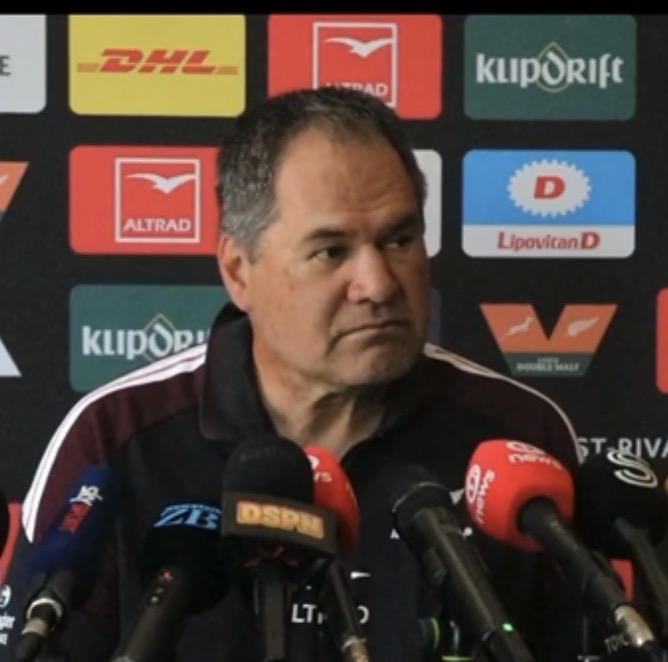
While NZR’s accountants are apparently trying to find NZ$20 million a year in savings, the Springboks just beat New Zealand 3–1 in Rugby’s Greatest Rivalry series. The supplied research notes the collision plainly: financial pressure off the field arriving alongside defeat to South Africa on it.
That’s not the cause of NZR’s financial situation.
But commercially?
Winning matters.
The All Blacks are the profitable property.
They are the international attraction.
They are the jersey people pay to watch.
They are the thing that can travel to Baltimore and reportedly bring NZR roughly NZ$9 million from one Test.
So when the rest of your professional structure is struggling economically, maintaining the strength of the one product actually generating the money becomes even more important.
South Africans reading this:
Don’t smile too hard.
Professional rugby is expensive everywhere.
But New Zealand’s numbers give the rest of the rugby world one hell of a warning.
You can have history.
You can have trophies.
You can have one of the most famous jerseys in sport.
You can even have record revenue.
And your model can still be broken.
SO WHO’S ACTUALLY BLEEDING NZ RUGBY DRY?
Maybe that’s the wrong question.
Because there probably isn’t one villain.
Not the Black Ferns.
Not one executive.
Not one sponsor.
Not one competition.
The more uncomfortable conclusion is structural:
New Zealand Rugby has built a professional rugby system whose total cost appears to be outrunning what its commercial market can sustainably support.
The All Blacks make money.
Everything underneath them needs significant investment.
Super Rugby’s economics are under pressure.
The player bill is enormous.
League is fighting for the same audience.
And even record revenue hasn’t been enough to consistently produce a bottom-line profit.
That is much scarier than an NZ$11 million Black Ferns graphic.
Because you can cut one programme.
You can renegotiate one contract.
You can fire one executive.
But when the system itself doesn’t balance?
Unc...
You need a new system.
Cameras off.
Who are we blaming now?
ScrumAtMe — Comedic Technical Analysts.
Real rugby news. Weaponised into comedy.