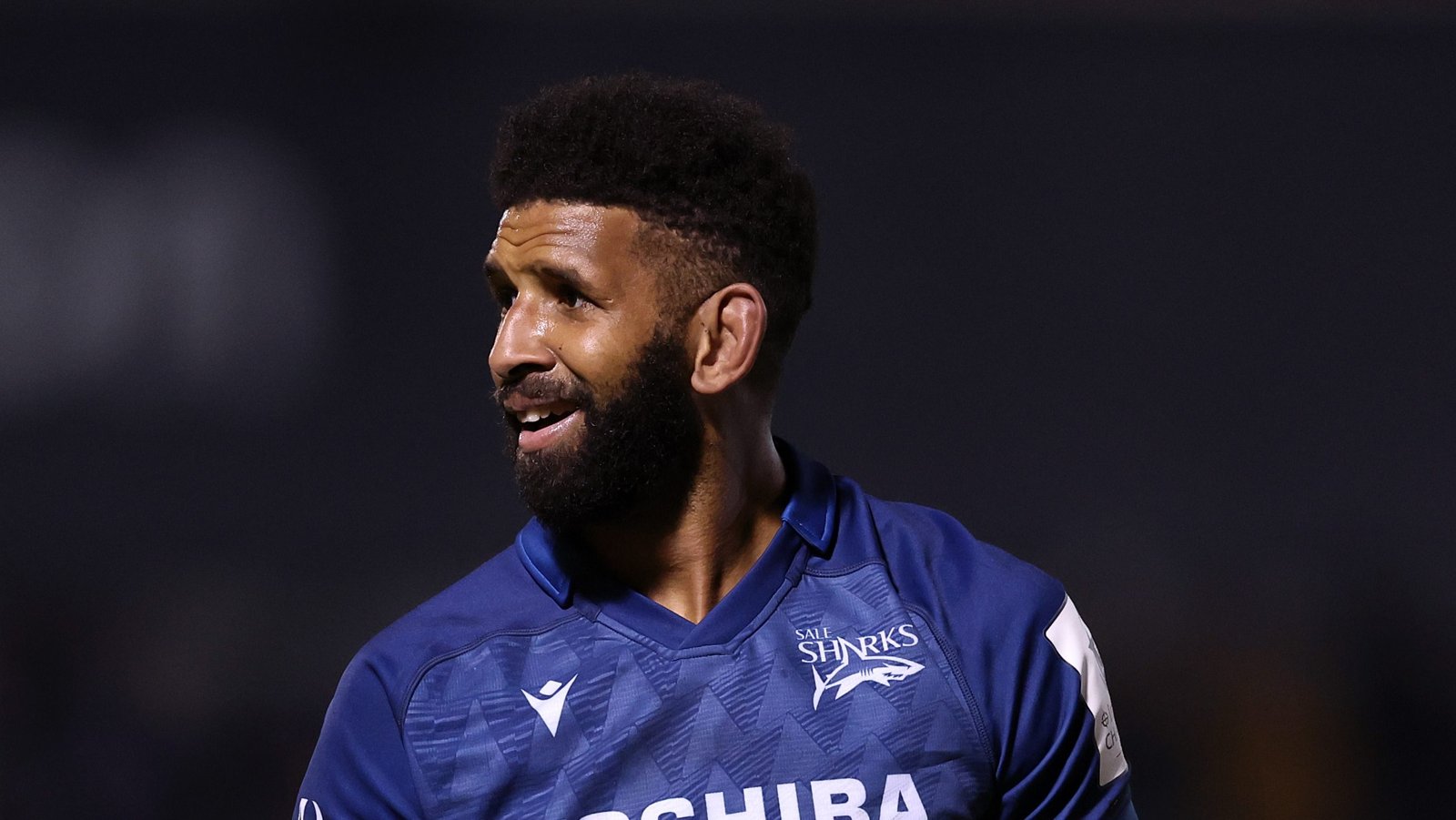
Hyron Diego Andrews was 31 years old. He was a professional lock, a husband, a father of two young boys, and a player who had spent years building his career through South African and English rugby.
On Friday, 16 October, Andrews died while the Lions were in France preparing for their European Champions Cup fixture against Stade Rochelais.
The news sent shockwaves through the rugby community. Tributes followed from the Lions, SA Rugby, the Sharks and Sale Sharks, the English club where Andrews had spent two seasons establishing himself as a popular member of the squad.
But beyond the tributes, one question remains at the centre of the story: what actually happened to Hyron Andrews?
French authorities have opened an investigation into the circumstances of his death. Initial reporting indicates that there were no signs of third-party involvement, with accidental death among the early investigative considerations.
That is important. But it is not the same as having a definitive explanation.
And when a 31-year-old professional athlete dies unexpectedly, the difference between what we know and what we assume matters.
The final morning: the details that matter
According to initial French media reports citing information from the investigation, Andrews had reportedly used a hammam approximately an hour before he was discovered unresponsive in a shower cubicle at the team's accommodation on Île de Ré, near La Rochelle.
The cubicle was reportedly locked from the inside.
Emergency services attended, and resuscitation attempts were unsuccessful.
Those details have understandably attracted attention. But none, on its own, establishes the medical cause of death or the precise sequence of events.
The reported hammam session is part of the timeline. The locked cubicle is part of the circumstances. The emergency response tells us about his condition when help arrived.
None of those details, individually or together, proves that Andrews suffered a heart attack.
That distinction is not nitpicking. It is the difference between reporting the evidence and writing the ending before the investigation has established what happened.
Cardiac arrest is not the same as a heart attack
Some reports have described Andrews as having been found in cardiac arrest. Other commentary has characterised his death as a heart attack.
Those descriptions should not be treated as interchangeable.
Cardiac arrest means the heart has stopped pumping blood effectively. It describes a life-threatening event, not necessarily the underlying reason it occurred.
A heart attack, medically known as a myocardial infarction, occurs when blood flow to part of the heart muscle is interrupted. It can trigger cardiac arrest, but cardiac arrest can also result from other conditions.
So, could a 31-year-old professional rugby player suffer a fatal cardiac event?
Yes.
Elite fitness does not eliminate every risk. Some inherited electrical disorders and structural heart conditions can remain undetected, even in competitive athletes. Dangerous heart rhythms can occur without an obvious warning. Other medical emergencies can also cause sudden collapse.
But here is the crucial point: we have no verified evidence establishing that any of these conditions caused Andrews' death.
The hammam has also attracted attention because exposure to intense heat can contribute to dehydration, dizziness and changes in blood pressure. Yet the fact that Andrews reportedly used one before his death does not establish a causal connection.
It is a legitimate medical question to investigate, not a diagnosis to publish.

The fall: did it cause his death, or did something else happen first?
There is another important distinction in the public reporting.
SA Rugby described Andrews' death as following an accident involving a fall at the team hotel. Meanwhile, the initial French reporting described the circumstances in which he was found and the authorities' investigation into the cause of death.
These accounts should be examined separately rather than merged into a single, supposedly settled narrative.
If a fall occurred, the central question is whether it caused the fatal injury or whether another event caused Andrews to collapse before he fell.
Consider two possibilities.
Scenario one: the fall came first.
Andrews could have slipped or fallen and sustained a fatal injury. Medical examination and the evidence from the scene would be needed to establish whether that explains his death.
Scenario two: a medical emergency came first.
Andrews could have suffered a sudden medical event, collapsed and sustained a secondary injury. In that case, the fall might have been a consequence rather than the original cause.
These are possible sequences, not competing claims about what definitely happened.
The distinction matters because the presence of an injury does not automatically establish what caused it, just as being found in cardiac arrest does not establish what initiated the emergency.
The publicly available reporting reviewed for this investigation does not resolve that sequence.
Was there a previous medical problem?
This is another question worth asking, particularly given Andrews' age and profession.
A review of the public reporting and career information available for this investigation has not identified a credible published report confirming that Andrews had previously been diagnosed with a heart condition, suffered a cardiac arrest or withdrawn from a match or tour because of a serious cardiac problem.
That finding needs to be stated carefully.
It means that a previous diagnosis has not emerged from the public record reviewed here. It does not establish that Andrews had no underlying medical condition.
Professional teams maintain medical information that is not routinely disclosed in selection announcements or match reports. A player can also have a condition that has never been publicly reported.
One detail from the initial reporting is particularly relevant: accounts relayed through the Associated Press indicated, according to his entourage, that Andrews had shown no apparent signs of health problems in the days before his death.
That is useful context, but it should not be mistaken for a published medical assessment or proof that no underlying condition existed.
What does his rugby record tell us?
Andrews had continued playing professional rugby through his time with Sale Sharks and his return to South Africa with the Lions.
He made 45 appearances for Sale, according to the club's reporting, before joining the Lions for the 2026–27 season.
He also started for the Lions against the Bulls on 10 October, six days before his death.
His documented absences from selection need to be interpreted in context. In January 2026, he received a four-week suspension following a dangerous tackle against Toulouse. That was a disciplinary suspension, not evidence of a medical problem.
Sale initially recruited Andrews in 2024 as injury cover for Jonny Hill. That referred to Hill's injury, not Andrews being injured.
Neither circumstance should be repackaged as evidence of an undisclosed illness.
The responsible conclusion is that no publicly documented medical diagnosis or clearly medical-related withdrawal has been established by the material reviewed for this investigation.
Anything stronger would go beyond the evidence.
Foul play: what have the French authorities said?
The initial reports from France are significant because they provide information attributed to the authorities investigating the death.
La Rochelle prosecutor Arnaud Laraize confirmed that an investigation had been opened to establish the cause of death. Initial reporting indicated that investigators had found no sign of third-party involvement at that stage, while an autopsy was expected.
That points away from an initial suspicion of homicide.
There is, however, an important qualification: the absence of reported signs of third-party involvement is not the same as a final determination of every circumstance surrounding a death.
The locked shower cubicle does not, by itself, establish foul play. Neither does the hammam session, the timing of the discovery or the fact that Andrews was a young athlete.
At the time covered by the initial reports, there was no publicly established evidence of foul play. The investigation's definitive medical conclusion had not been published in the material reviewed for this article.
That is the line the evidence supports. Anything else requires evidence that has not yet been established publicly.
Who was Hyron Andrews?
It is easy for a sudden death to reduce a person to the circumstances of their final hours. Andrews' story deserves more than that.
Born in Paarl on 6 July 1995, Andrews attended Hoërskool Garsfontein in Pretoria and developed through South African rugby's age-grade and professional structures.
He represented the Junior Springboks at Under-20 level in 2015 and spent approximately a decade in the Sharks system, progressing from the development pathway into senior professional rugby.
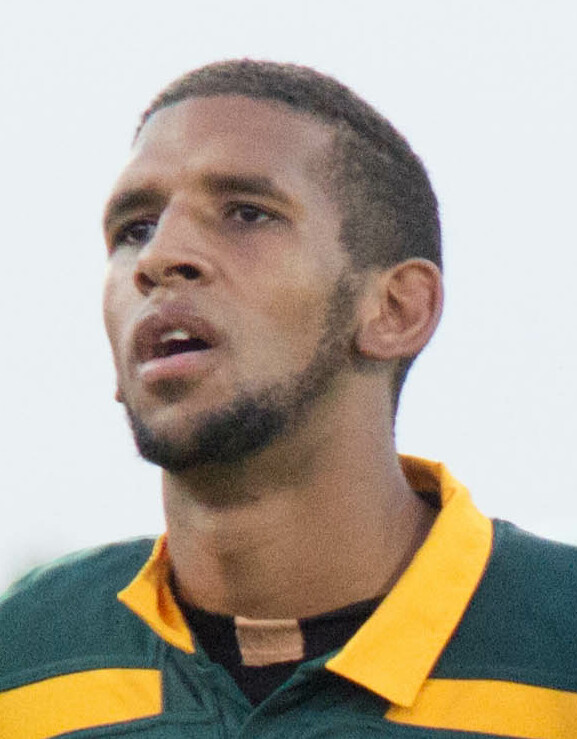
In 2024, he moved to England's Sale Sharks, initially on a short-term arrangement. He subsequently earned a longer stay and made 45 appearances for the club.
Sale director of rugby Alex Sanderson remembered Andrews as a skilled, funny and charismatic player who was popular with his teammates. The club also spoke warmly about his family and their life in Manchester.
In 2026, Andrews returned to South Africa to join the Lions.
He was beginning another chapter in his career, with the Johannesburg side preparing for its first Champions Cup campaign.
He never earned a senior Springbok cap, but that should not obscure the professional career he built across two countries and multiple competitions.
He was also a husband and father. Tributes named his wife, Maiglin, and their sons, Hendrix and Emerson, among those left grieving.
Those details matter because this is not simply a story about an unexplained death in a hotel. It is the loss of a person whose life extended far beyond a rugby team sheet.
The Anthony Foley parallel: a remarkable coincidence, not an explanation
Another detail has drawn attention: Andrews died on 16 October, exactly ten years after the death of former Munster coach and Ireland international Anthony Foley.
Foley died in a Paris hotel in 2016, aged 42, while Munster were preparing for a European Champions Cup match against Racing 92.
Andrews died in France on the eve of the Lions' European fixture against La Rochelle.
The parallels are striking: rugby figures travelling for European competition, a hotel, a death immediately before a match, and teams suddenly forced to confront an unimaginable loss.
But the similarity ends there unless further evidence establishes something more.
Foley's reported medical circumstances do not tell us what happened to Andrews. The anniversary does not establish a connection, and two tragedies occurring in similar settings should not be used to construct a medical explanation for either.
It is context, not evidence.
What happens next?
The next meaningful development is not another tribute or another article repeating the same initial reports.
It is evidence that answers the outstanding questions.
The most important outstanding information includes:
- The autopsy findings: whether a traumatic injury, cardiac condition or another identifiable medical cause contributed to the death.
- The sequence of events: whether a fall occurred and, if so, whether it preceded or followed the medical emergency.
- The official investigation: whether the prosecutor or gendarmerie publishes further findings that clarify the circumstances.
- Any relevant medical history: if established through reliable, appropriately sourced information and made public by authorised sources.
- Further statements from the family or clubs: if they choose to provide additional information.
As of the reporting available for this investigation on 16 October 2026, a definitive autopsy result and final judicial conclusion have not been verified.
That limitation must remain explicit. We should not present an anticipated result as though it has already been published.
The verdict: the questions are legitimate. The answers must be evidence-based.
A 31-year-old professional rugby player has died unexpectedly while travelling with his team in France.
The initial reports describe a hammam session, a locked shower cubicle, an emergency response and an investigation into the cause of death. SA Rugby has referred to a fall, while the French authorities' initial position was that the cause remained to be established and there were no initial indications of third-party involvement.
There is no verified basis in the material reviewed here to conclude that Andrews suffered a heart attack, that he had a previously diagnosed cardiac condition or that another person was responsible for his death.
Those are different questions, and they require different evidence.
The public record also does not justify declaring the case conclusively solved simply because foul play was not initially suspected.
We need the medical findings. We need the official conclusions. And we need to be precise about what each source has actually confirmed.
Because asking how a fit 31-year-old could die unexpectedly is entirely reasonable.
Pretending to know the answer before the evidence is available is not investigation.
Scrum At Me — We follow the facts, challenge the gaps and keep speculation out of the verdict.
Editorial note: This article reflects the initial public reporting available on 16 October 2026. It should be updated if French authorities publish further findings or if reliable new evidence changes the account of Andrews' final hours.