Listen up, bro. Sit down. Pour something brown, put the phone face-down, tell whoever’s in the room it’s a work call — because we need to have a real, grown conversation about the naughty white powder and the sport that keeps getting caught holding it.
But before we get to a single name, I need you to understand the setup, because the setup is the whole joke.
Cocaine — of ALL the things a professional athlete could put in his system — is the one substance that the doctors, the scientists, every man in a white coat with a clipboard, AGREE does nothing for your rugby. Nothing. It doesn’t make you faster. Doesn’t make you stronger. It makes you talk for forty-five straight minutes about a business plan and then lose your car keys. That’s the drug we’re talking about. Not some lab-made super serum — the thing that has grown men rearranging furniture at 4am.
And YET — the rulebook treats it like it’s enriched uranium. Run this logic with me, because the logic is diabolical.
Cocaine is only illegal in competition. You hear me? Only on match day. Hit it on a Monday — free man, model citizen, coach of the year. Hit it on a Saturday — public enemy number one. Same nose, bro. Same gram. Same regret in the morning. The ONLY variable is the calendar. Which means World Rugby built an entire drug policy around whether or not the man can read a fixture list. That’s not a doping code, that’s a reading-comprehension test.
So let’s open the file. England. The Union.
EXHIBIT A — THE MAN WHO STARTED THE WHOLE CONVERSATION
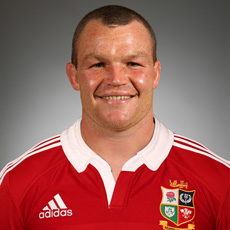
Matt Stevens. This is where it all begins, so we start here.
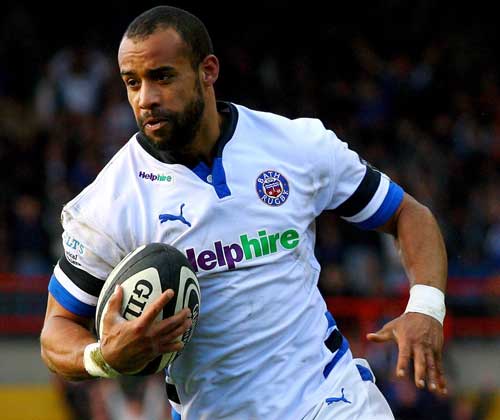
Bath prop, England international, a British & Irish Lion — proper résumé, top of the game. December 2008: Bath play Glasgow in the Heineken Cup, and after the match Stevens does the routine thing, gives his little sample in the little cup. And that cup comes back waving a red flag the size of a beach towel. Cocaine metabolite. He gets charged on the 18th of January 2009. Provisionally suspended. And European Rugby’s disciplinary panel drops the full anvil: two years, backdated to the day he was charged.
Now — real talk for a second, no jokes on this part — Stevens himself came out and spoke openly about going through something genuine, and I’m not in the business of laughing at a man’s actual struggle. So the comedy here isn’t him. The comedy is the SENTENCE.
Two years, bro. Two. That ban wiped out his 2009 Lions tour — to South Africa, to OUR house — and effectively his 2011 World Cup. Gone. Vanished. And England manager Martin Johnson, a man who has never once in recorded history softened a sentence in his life, stepped to the mic and went: “Matt chose to take a banned substance and will now have to accept the consequences.” Stone cold. No blanket, no pillow, nothing. That quote has a wind-chill factor.
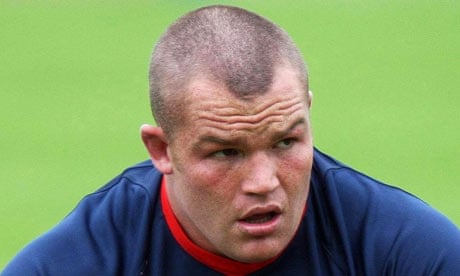
Stevens served the full two-year ban, then rebuilt at Saracens.
But here’s why Stevens is the right place to start and not just a warning label: the man came BACK. Did his time, went to Saracens, grinded his way back into the England setup, and made the 2013 Lions tour. From completely off the map back onto the plane. That’s not a punchline, that’s a comeback story, and I’ll tip my hat to it every time.
EXHIBIT B — THE PARTY THAT LAUNCHED A THOUSAND HEARINGS
Here’s the thing though — Stevens didn’t fall out of a clear blue sky. He fell out of the Bath 2009 affair, which is the thickest, sweatiest cluster in the entire English file, and the whole thing traces back to four words that should terrify every HR department on the planet:
“Unofficial end-of-season party.”
Unofficial. End-of-season. Party. Every single one of those words is a load-bearing wall holding up a building made entirely of bad decisions.
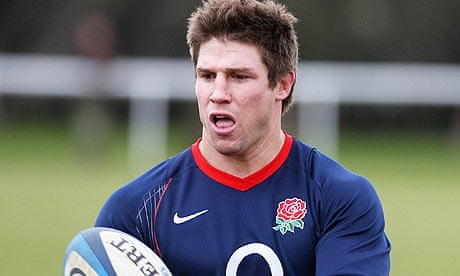
The Bath 2009 affair — the fallout from one end-of-season party.
Out of that one gathering, the dominoes start dropping. Justin Harrison — former Australia lock, serious operator — puts his hand up and admits he got into the powder at the event. Straight up, no dancing. And because he pleaded guilty and cooperated like a professional, they knocked what was an eighteen-month ban down to eight. Fair. Honest man takes the honest discount. Respect where it’s due.
But then you’ve got the OTHER three, and this is where it turns into cinema. Michael Lipman, Alex Crockett, Andrew Higgins — they resign from the club and front up to an RFU hearing. And I need you to lean all the way in for this next detail, because this is the part that separates the rookies from the legends.
This trio wasn’t charged with a positive test. Nah. They got charged with refusing to take the test.
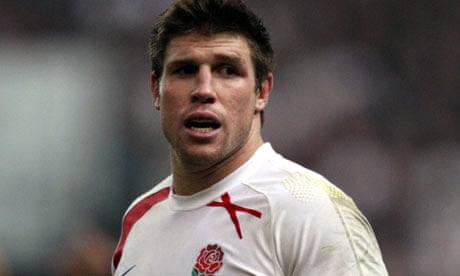
The trio were sanctioned for refusing drug tests — not for a positive cocaine result.
REFUSING. The audacity! Bro, in what universe does declining the drug test make you look BETTER?! That is the single most self-incriminating move in the entire playbook. That’s the police asking to look in the trunk and you eating the car keys right there in front of them. The nine-month ban they caught was officially for “conduct prejudicial to the interests of the game,” and their joint statement — I promise on everything I’m not adding a word — was that they’d “do everything possible in order to clear our names.”
“We will do everything possible to clear our names.” Everything, gents?
Everything possible, my guys? EVERYTHING? Because there was one thing. One small, cup-shaped thing. Available earlier. That would’ve cleared it up in about twenty minutes. And y’all looked at that little cup and said “we’re good, thanks.” That’s wild work. And later on, the reports note Lipman and Crockett even lost the appeal, which means somebody looked at “we refused the test” a SECOND time and went “yeah, still no.” Run it back as many times as you want, that tape doesn’t get better.
EXHIBIT C — THE WEDDING DEFENSE
Put the Bath boys down for a minute and meet Pattrick Hillier.
Cheltenham Tigers. SEVENTH tier of English rugby. We are talking about a car park with posts, a physio who’s probably also the guy who does the fixtures, and a crowd you could count without taking your socks off. This man fails an in-competition test in 2017. Cocaine.
His explanation? Somebody spiked his drink. At a wedding.
And here’s the crazy part — the panel actually accepted there was no evidence he took it to enhance his performance. Which, obviously, because we already covered that the stuff makes you WORSE. But strict liability doesn’t care about your story, doesn’t care about the open bar, doesn’t care about the DJ or the chicken-or-fish. Two-year ban. TWO YEARS. For a seventh-tier amateur.
So now — NOW — hold Hillier up next to what’s coming, because this is where the machine shows you its true face. A seventh-tier amateur playing for pride and orange slices gets TWO YEARS. Meanwhile the Premiership professionals — we’re getting there, be patient — have been catching a fine and a firm handshake for the same powder. Let that marinate. The further down the ladder you are, the harder the boot comes down. It is the only justice system on Earth where being a nobody is the aggravating factor.
EXHIBIT D — THE COMBO PLATTER
Jake Pope. Sale Sharks. Tested on the 20th of November, 2018 — and this sample comes back positive for cocaine AND cannabis.
A combo, bro. A tasting menu. This man was not specializing, he was diversifying the portfolio. And the only reason we even KNOW his name — because, as you’re about to see, the RFU normally guards these names like the launch codes — is that Pope’s case got logged as the first-ever second breach of the RFU’s illicit-drugs policy.
That’s the mechanism, and it’s important: first offence, they keep it sealed. Second offence, the curtain comes up and the spotlight hits you. So Pope walks into a February 2019 hearing and walks out with a six-month ban and a thousand-pound fine. A grand. That is the most expensive “nothing happened last night” in the history of Manchester.
EXHIBIT E — THE VAULT
And here it is. The masterpiece. The part where the RFU honestly deserves an award for engineering.
Under the RFU’s Illicit Drugs Programme, your first recreational positive is handled confidentially. You get a fine, you get sent for education and assessment, and — this is the key — you do NOT get named. The theory is that it’s a health matter, treat it quietly. Noble, on paper. Hilarious, in practice.
Because when the RFU announced that in the 2015-16 season two Premiership players tested positive for cocaine out of competition — you know how many names dropped? Zero. They fined them, referred them to a specialist, and welded the file shut. Their man Stephen Watkins described it as “an extremely low number of positive cases.” And that’s a beautiful, beautiful sentence, because “an extremely low number” is still a number bigger than zero, and “bigger than zero” is doing an Olympic amount of heavy lifting in that quote.
And it’s not a one-off, that’s the thing. Read the reports back year on year and it’s a steady little drip: five cases in 2012-13, four in 2013-14, two in 2014-15, and a 2017-18 batch of four positives out of 332 tests, filed under the gloriously vague heading “cocaine and alcohol.” Two great tastes that go great together, apparently. And every first-timer? Sealed. Unnamed. Protected.
Bro, these are the most confidential witnesses in world sport. Witness protection is looking at this budget like “how?” Somewhere under an RFU building there’s a filing cabinet that knows more secrets than a barbershop on a Saturday, and that cabinet is NOT talking. You could waterboard it. It’s seen things. It’s keeping every one of them.
And I want to be precise here, because this is the actual point and not just a bit: nobody outside that programme knows who those Premiership players were. By design. So anybody out there claiming to “reveal” the names is not reading the file — they’re guessing, and a guess dressed up as a fact is exactly the kind of thing that gets people sued. We deal in what’s documented. The vault stays shut. That’s not me being soft, that’s me not making anything up.
EXHIBIT F — THE CAREER CHANGERS
And then, right at the end of the union file, two names in a completely different weight class — because these two weren’t customers. They were the plug.
Luke Sharpley, of Oundle, pleads guilty at Northampton Crown Court in 2023 — concerned in the supply of cocaine, plus possession of cannabis with intent — and catches an eighteen-month suspended sentence. Then UKAD stacks a three-year ban on top for trafficking, running July 2024 all the way to July 2027, reduced from four because he admitted it promptly. From club rugby to “concerned in the supply.” That is a serious change of position, and none of the coaching manuals cover it.
But Sharpley’s a featherweight next to Carl Burgess. Former Coventry second-row, about twenty-five appearances for the club — turns out he was running a whole Midlands drug operation. Pleaded guilty to conspiracy to supply Class A. Fifteen years. FIFTEEN. My guy went from contesting the lineout to running the entire distribution network, and pulled a sentence longer than most players’ whole careers. When the scouts say a big man’s got a real future off the field — bro, this is not what they meant. That’s not the front office. That’s a completely different kind of operation, and it does not have a pension plan.
That’s Part One — the Union — locked to the facts, no addiction played for a laugh, nobody real turned into a sex joke, nothing invented, and the whole thing pointed exactly where it should be: a rulebook that hands a wedding guest two years and a Premiership pro a leaflet and a hug.