
Picture it: you pop out to the shops, and by the time you're back the neighbours have moved a jumping castle onto your lawn, plugged a sound system into your wall, and started handing your own kids party packs. That is precisely what is unfolding in Cape Town this week. The All Blacks have touched down for their first full tour of South Africa in THIRTY years, and instead of sneaking in quietly like polite tourists, they've booked out Cape Town Stadium, thrown a free public welcome bash, and switched on a media charm offensive so slick it should come with its own producer. And the timing? Immaculate. Ruthless. Almost rude. Because our Springboks are on the other side of the Atlantic, in Argentina, and New Zealand has strolled into an empty house and started rearranging the furniture.
Here's the uncomfortable truth: the charm offensive is working
Now, a lot of countries tour South Africa. Very few of them can pull a crowd here. The All Blacks are the glaring, glorious exception — because outside of New Zealand itself, there is no place on the planet where the silver fern flies harder than in South Africa, and nowhere in South Africa where it flies harder than Cape Town. Walk into any Bok Test against New Zealand and you'll spot them: whole pockets of the stadium in black, waving the fern, and a huge share of them proud Black South Africans cheering their lungs out for the visitors. This is not a rumour or a wind-up. It's a decades-old, well-documented fact of our rugby life, and right now the All Blacks are pressing on exactly that soft spot.

To understand why, you have to open the old wound
You cannot talk about this rivalry as if it started with a coin toss. It is drenched in history, and a lot of that history is painful. For decades the Springbok badge — the badge we now all wear with such pride — was, to millions of South Africans living under apartheid, the emblem of the government's team, an all-white side representing a system that had crushed them. So when the mighty green machine ran out, plenty of Black South Africans did the only rebellious thing available in a stadium: they cheered for whoever was in the OTHER jersey. And more often than not, the other jersey was black, with a fern on the chest, worn by brown-skinned men from the Pacific who — crucially — looked like family.
New Zealand paid a price to be on the right side of it
And the connection ran both ways. When apartheid South Africa was frozen out of world sport, New Zealand became the fault line. The 1981 Springbok tour of New Zealand tore that country nearly in half: around 150,000 people took to the streets across 28 towns and cities in more than 200 demonstrations, in some of the most violent peacetime scenes New Zealand had ever seen, all to protest sporting contact with apartheid — and to protest the shameful earlier reality of Maori players being left at home so as not to offend the South African regime. Archbishop Desmond Tutu said the protests told South Africans the world had not forgotten them, that they were not alone. That is the weight this fixture carries. It's not a game with history attached; it's history with a game attached.
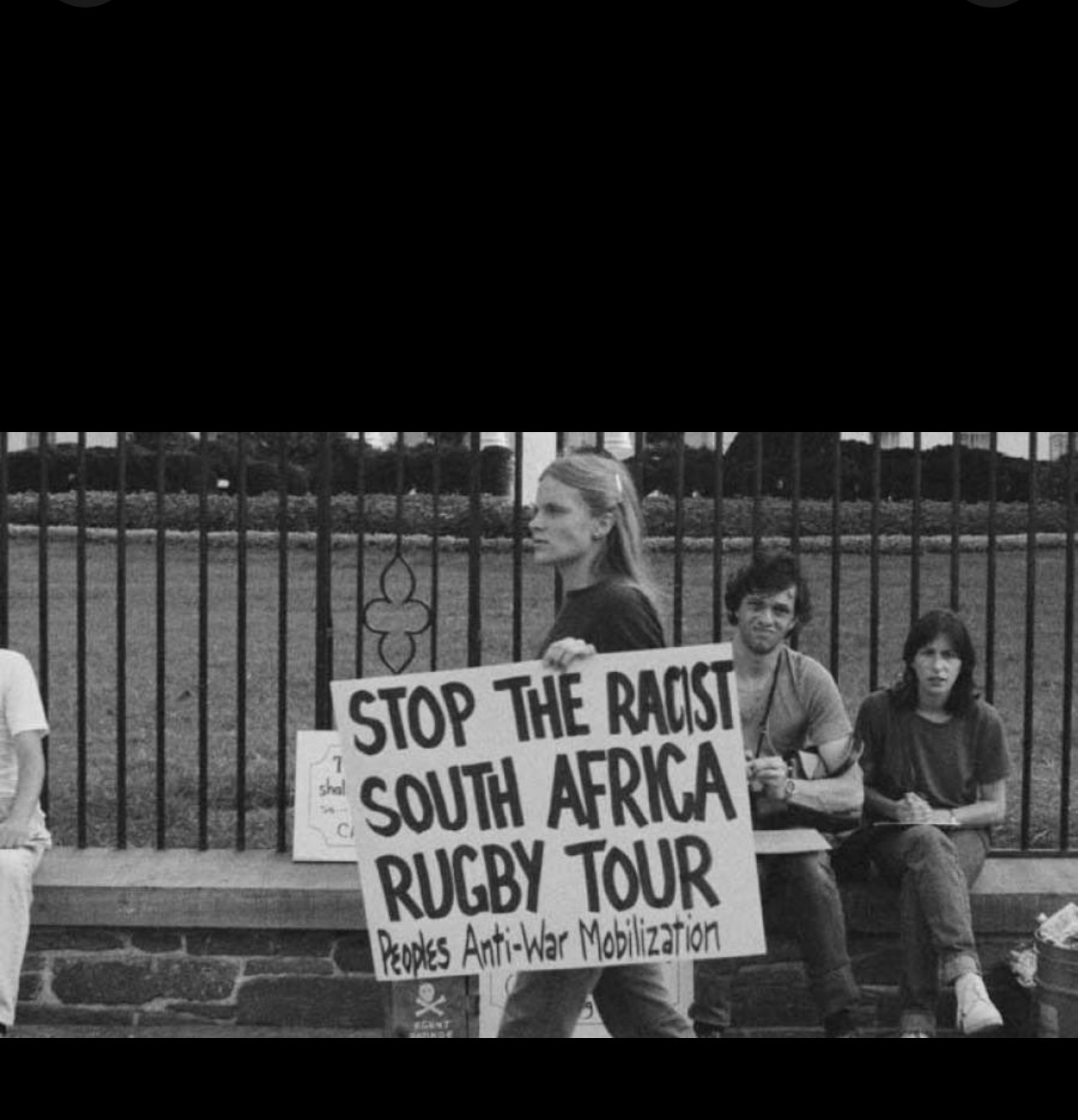
So while the Boks are in Buenos Aires, New Zealand is working the room
Fast-forward to right now and you can see the strategy, whether it's deliberate or just instinct: with the Boks away in Argentina, the All Blacks have a clear diary and a captive, curious, half-sympathetic South African audience — and they are converting. Training sessions people can watch. Press conferences that go viral. A free family day at the stadium. Meanwhile back home the counter-punches aren't landing the same way; you can post the perfect Siya clip to remind everyone who the world champions are, and still watch the timeline swoon over a bunch of blokes in black doing a walkabout in the Mother City. The longer our boys are gone, the more the tourists own the narrative — and a narrative, left unguarded for three weeks, has a funny way of becoming a fanbase.
But before New Zealand gets too comfortable — the scoreboard of the ages
Let's keep it honest, because honesty is what makes this rivalry sacred. In 110 Tests, the All Blacks lead 62 to 40 with four draws. New Zealand are the ONLY team on earth against whom the Springboks carry a losing record — a splinter lodged in the national soul that every other rival has failed to put there. That's not a weakness to hide; it's the exact reason this is THE rivalry. It's the one mountain still worth climbing. And the good news, whispered from Wellington only last September, is that the Boks put 43-10 on these very All Blacks on their own soil — the biggest win we've ever landed in the fixture. The mountain, it turns out, has started to move.
So welcome to South Africa, gentlemen. Enjoy Cape Town, wave your ferns, charm our cousins, take your selfies with the mountain behind you. You've earned the fanfare, and God knows you've earned your place in the deepest, most complicated love-hate story in world sport — one built on a century of near-even genius and a shared, scarred history that no other two nations can claim. But the Boks are coming home. The ranking is number one. And on the 22nd of August, when the anthems roll at Ellis Park, every one of those borrowed South African hearts is going to feel the old pull of the green and gold. Steal the house while we're out if you must, boys. Just remember whose name is on the title deed — and how badly we want to keep it.